Canada 0-3 Morocco: Ounahi Double Sends Atlas Lions Into Quarter-Finals
Morocco beat Canada 3-0 as Azzedine Ounahi scored twice and Soufiane Rahimi sealed a quarter-final place.

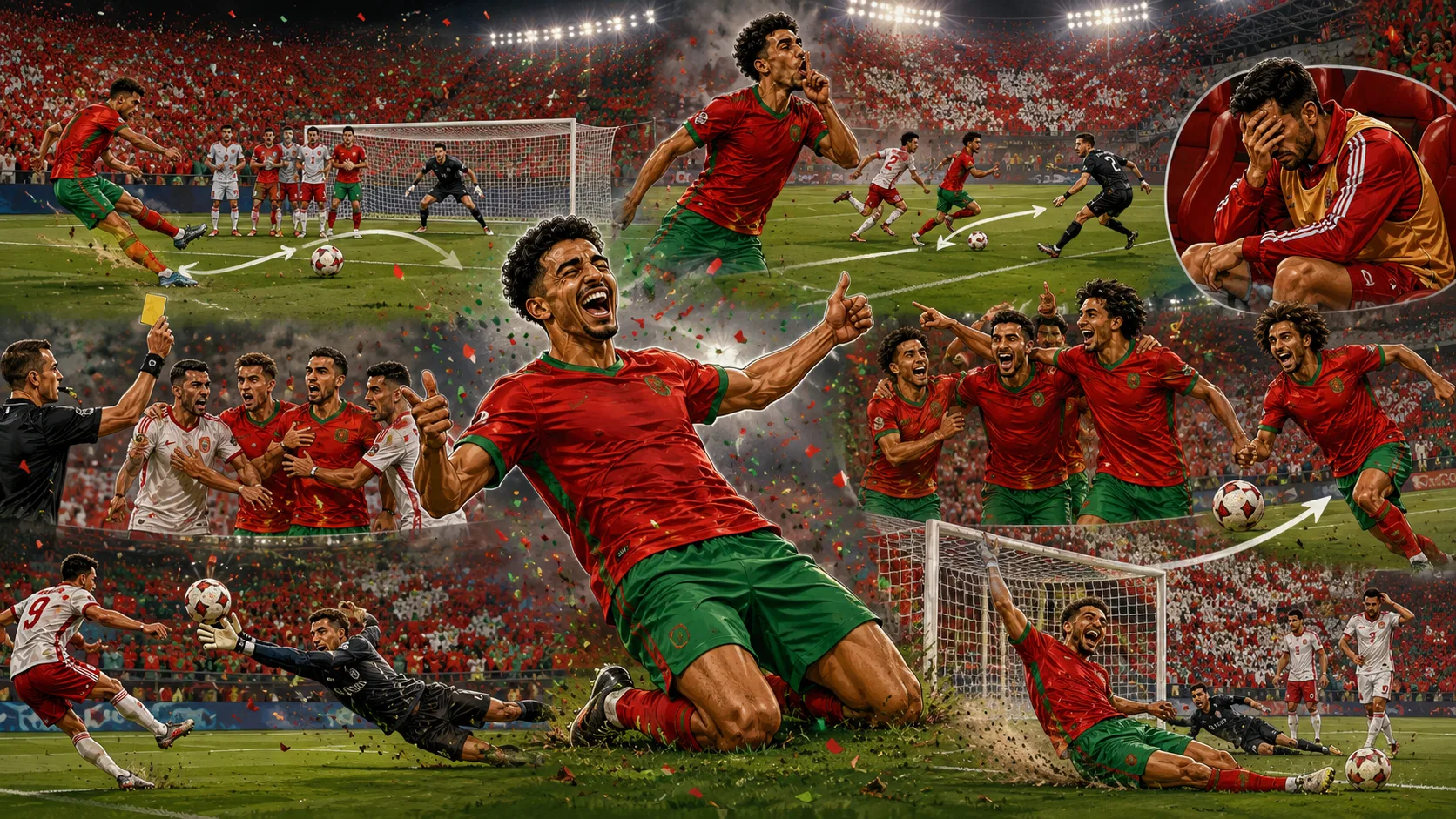
Canada 0-3 Morocco: Ounahi Double Sends Atlas Lions Into Quarter-Finals
Canada 0-3 Morocco: Azzedine Ounahi scored twice and Soufiane Rahimi added a stoppage-time third as Morocco ended Canada’s World Cup 2026 run in Houston.
Main Match Story
Morocco reached the World Cup 2026 quarter-finals with a clinical 3-0 victory over Canada at Houston Stadium, ending the co-hosts’ most successful men’s World Cup campaign.
Canada started aggressively and created the better early chances, but Morocco survived the pressure before taking control after half-time. Azzedine Ounahi scored in the 50th and 82nd minutes, while Soufiane Rahimi added the final goal in the eighth minute of stoppage time.
The result makes Canada the first co-host to exit the tournament, while Morocco move one win away from matching their famous semi-final run from 2022.
First-Half Analysis
Canada began with intensity, pressing Morocco high and forcing the Atlas Lions into rushed decisions. Jesse Marsch’s side looked sharper in the opening stages and should have taken the lead inside the first 11 minutes.
Jonathan David and Tani Oluwaseyi were both denied in one-on-one situations by Bono, whose early saves became crucial to the direction of the tie.
Morocco struggled for fluency and grew frustrated in a bad-tempered first half. The tension peaked when Achraf Hakimi and Richie Laryea were both booked after a flashpoint near the touchline.
Despite Canada’s pressure and the 0-0 half-time scoreline, Morocco’s defensive shape held firm, keeping the match within reach for a more composed second-half response.
Second-Half Analysis
Morocco transformed the game five minutes after the restart. Hakimi worked a clever cut-back free-kick into the path of Ounahi, who swept home from inside the D as Canada’s defence failed to close him down.
The goal changed the rhythm. Canada continued to push but struggled to turn territory into high-quality chances, while Morocco became increasingly dangerous on the break.
Ounahi delivered the decisive second in the 82nd minute, finishing a counter-attack to give Morocco breathing room. Rahimi had already looped a header onto the crossbar before he finally got his goal with the final touch of the game, sliding the ball under Maxime Crepeau after another Brahim Diaz assist.
Key Turning Point
The opening goal after half-time changed the tie. Canada had been the better side before the break, but Ounahi’s 50th-minute finish gave Morocco control and forced the co-hosts to chase against one of the tournament’s strongest defensive units.
Key Events
- Opening 11 minutes: Jonathan David and Tani Oluwaseyi were denied one-on-one by Bono.
- 40′ – Bookings: Achraf Hakimi and Richie Laryea were both booked after a touchline flashpoint.
- Half-time: Canada 0-0 Morocco.
- 50′ – Goal, Morocco: Azzedine Ounahi swept in Achraf Hakimi’s cut-back free-kick.
- 82′ – Goal, Morocco: Ounahi scored his second from a breakaway after Brahim Diaz’s assist.
- 90+8′ – Goal, Morocco: Soufiane Rahimi slid in Morocco’s third with the final touch.
- Full-time: Canada 0-3 Morocco.
Canada Team Analysis
Canada’s tournament ended painfully, but not without pride. They pressed Morocco relentlessly in the first half and created the chances to make the match look very different.
The problem was finishing. David and Oluwaseyi were denied early, and Canada’s 30 touches in the Moroccan box produced only three shots on target. After the 11th minute, their threat faded against Morocco’s compact defensive structure.
The absence of a fully-fit Alphonso Davies also hurt. The captain remained an unused substitute after further hamstring discomfort, leaving Canada without one of their most explosive attacking weapons.
Even so, this campaign still represents historic progress: first point, first win, group-stage progression and a first knockout victory at a men’s World Cup.
Morocco Team Analysis
Morocco did not start well, but they showed the maturity of a side comfortable in knockout football. Their first-half frustration could have spiralled, yet they stayed in the match through organisation and goalkeeping quality.
Bono’s early saves were decisive, while Hakimi’s delivery for the opener helped settle the Atlas Lions after the break. Ounahi then provided the calm finishing that Canada lacked.
Brahim Diaz was influential late on, assisting the second and third goals as Morocco punished the spaces Canada left while chasing the game. The final scoreline looked comfortable, but it was built on resilience during a difficult opening half.
Final Score
Full-time: Canada 0-3 Morocco.
Half-time: Canada 0-0 Morocco.
Goals: Azzedine Ounahi 50′, 82′; Soufiane Rahimi 90+8′.
Assists: Achraf Hakimi 50′; Brahim Diaz 82′, 90+8′.
Venue: Houston Stadium.
Attendance: 68,777.
What This Result Means
Morocco advance to the quarter-finals, where they will face France on Thursday, 9 July in Boston. The Atlas Lions are now one win from equalling their historic semi-final run from 2022.
Canada exit as the first co-host to leave World Cup 2026, but their campaign should still be remembered as a major step forward for the men’s national team.
Man of the Match
Azzedine Ounahi. The Morocco midfielder changed the match with two composed second-half finishes, turning Canada’s early pressure into a comfortable Atlas Lions victory.
Hot Stat
Morocco have now beaten Canada in back-to-back World Cups and remain unbeaten in five meetings with the co-hosts.
Final Analysis
Canada 0-3 Morocco was a lesson in knockout efficiency. Canada pressed, ran and created early chances, but Morocco absorbed the pressure and struck when the openings appeared.
Ounahi’s double gave Morocco control, Rahimi’s late goal added gloss, and Bono’s early saves ensured the Atlas Lions survived their most uncomfortable spell. Canada leave with disappointment, but also with a stronger World Cup identity than ever before.