
Senegal at World Cup 2026: Team Preview, History, Key Players & Prediction
Senegal at World Cup 2026: Team Preview, History, Key Players & Prediction
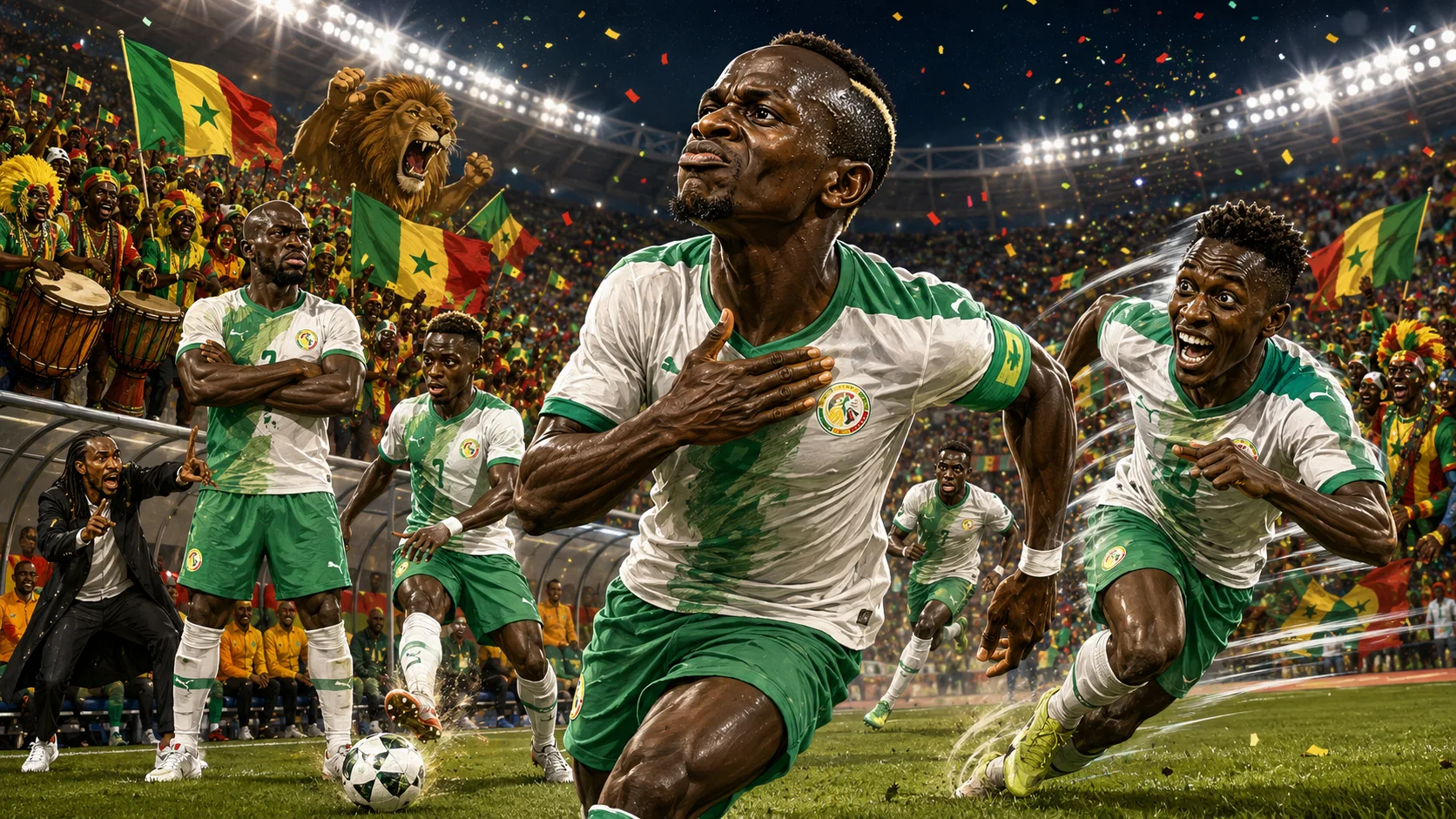
Senegal World Cup 2026 preview: Pape Thiaw’s Lions of Teranga arrive in North America as ambitious outsiders, mixing Sadio Mané’s experience, Kalidou Koulibaly’s defensive authority and a younger, quicker attacking generation built to challenge France, Norway and Iraq in Group I.
Senegal reach World Cup 2026 with a familiar sense of danger around them. They are not a novelty team, not a romantic outsider and not a side content with participation. This is a football nation that has already produced one of the greatest opening shocks in World Cup history, reached a quarter-final, won major continental honours and established itself as one of Africa’s most reliable modern powers.
The challenge now is different. Senegal are trying to refresh without losing the hard edge that made them so difficult to beat. The squad still has icons: Sadio Mané remains the emotional reference point, Koulibaly remains the defensive leader and Édouard Mendy brings experience in goal. But Thiaw has moved the team towards a younger, quicker profile, with more dynamic movement, more possession phases and a wider spread of attacking threats.
Group I is one of the most demanding sections of the tournament. France are title contenders, Norway have Erling Haaland and Martin Ødegaard, and Iraq arrive with a powerful underdog story after ending a 40-year World Cup absence. Senegal have enough quality to progress, but their route is unforgiving. They must start with courage against France, handle Norway’s direct threat and avoid slipping against Iraq.
Team Overview
Senegal come into World Cup 2026 in strong competitive shape. Their qualification campaign was controlled, efficient and convincing, and their squad has the balance to make them a dangerous opponent for anyone in Group I. They are athletic, organised, experienced in key areas and increasingly flexible in attack.
The most interesting development is regeneration. Thiaw has chosen to move away from some older names and integrate a younger profile. That has given Senegal more speed, more unpredictability and more hunger, but it also means parts of the squad are still developing international tournament experience. The mix between established leaders and younger players will define their campaign.
Senegal’s defensive base remains reliable. Koulibaly brings leadership, Mendy brings command and Moussa Niakhaté offers intelligence and composure in the back line. The team can defend deep, compete physically and protect central areas. That gives Thiaw the platform to take greater attacking risks.
Going forward, Senegal are no longer only about Mané’s individual spark. Ismaïla Sarr’s pace, Nicolas Jackson’s movement, Lamine Camara’s vision, Pape Matar Sarr’s midfield running and Amara Diouf’s youthful fearlessness all give the Lions of Teranga different routes to goal. The attack has been freshened up, and that matters in a group where every match will ask a different question.
Their biggest task is consistency. Senegal have often looked capable of big tournament runs, but recent knockout exits have been brutal. England punished them at the 2022 World Cup, and penalty heartbreak followed at the Africa Cup of Nations. World Cup 2026 is a chance to prove that this generation can combine talent, experience and ruthless tournament management.
World Cup History
Senegal’s World Cup history is short compared with the traditional powers, but it is rich in significance. Their debut in 2002 remains one of the greatest African campaigns in tournament history. They shocked France 1-0 in the opening match, a result that instantly changed how the world viewed them. It was not a lucky moment; Senegal went on to reach the quarter-finals.
That 2002 team became a reference point for African football. They played with courage, structure, athleticism and belief. They were eliminated by Turkey after extra time, but their run remains Senegal’s best World Cup performance and one of the finest by any African side.
The country returned in 2018 and suffered a painful exit on fair-play points after finishing level with Japan. It was a reminder that World Cups are decided by tiny margins, not only goals and points. Senegal had competed strongly but left early.
In Qatar 2022, Senegal reached the Round of 16 despite losing Mané to injury before the tournament. They beat Qatar and Ecuador to progress, but England exposed them in a 3-0 knockout defeat. That match was a harsh lesson in how quickly top-level opponents punish loose defensive and transition moments.
World Cup 2026 therefore carries layered motivation. Senegal want to honour 2002, surpass Qatar 2022 and prove that their development as an African powerhouse can translate into another deep global run. The quarter-final remains the historical benchmark. This squad has enough talent to chase it, but the group draw gives them no easy route.
Road to World Cup 2026
Senegal qualified in impressive fashion. They dominated their qualification group, becoming one of the first African sides to confirm their place at the finals. Their campaign reflected the strengths that have made them a consistent force: defensive stability, physical power, attacking speed and an ability to manage matches without panic.
The qualification process also showed the early shape of Thiaw’s rebuild. Senegal were no longer relying purely on the old core. Younger players were given trust, wide attackers were encouraged to carry the ball and midfielders were asked to support the final third more aggressively.
That evolution was necessary. The old Senegal formula was strong, but opponents had begun to understand it. The team needed more variety, particularly in possession. Thiaw’s decision to return to a 4-3-3 after an unsuccessful flirtation with a back three has made the side more balanced.
There has also been turbulence around Senegal’s recent continental story. The controversy surrounding their Africa Cup of Nations status has added edge to their campaign, but it may also sharpen the mentality. Senegal have often responded well to adversity, and this squad will want to redirect frustration into performance.
The opening match against France adds historical depth. Senegal’s greatest World Cup moment came against France in 2002, and Thiaw was part of that squad. Now he leads the national team from the technical area, trying to create another statement against one of the tournament favourites.
The Coach
Pape Thiaw is central to Senegal’s new direction. A member of the 2002 World Cup generation, he understands both the romance and the pressure of Senegalese football. But as a coach, he is trying to avoid being trapped by the past.
Thiaw has described Senegal as ambitious outsiders, a phrase that captures their position. They are strong enough to believe in progress but not burdened in the same way as France. They can attack the group with confidence while still using the underdog edge that has served Senegal well in previous tournaments.
His tactical evolution is important. Thiaw has often been labelled pragmatic, but he has tried to make Senegal more progressive. He wants midfielders such as Pape Matar Sarr and Lamine Camara to take risks in advanced areas, not simply circulate possession safely. He wants the front line to move dynamically rather than wait for isolated moments.
Man-management may be his greatest strength. Senegal’s squad contains established stars from high-profile leagues, experienced players based in Saudi Arabia and a wave of younger European-based talents. Keeping that group united requires authority and emotional intelligence. Thiaw appears determined to make the rebuild feel like a shared project rather than a generational split.
His challenge in North America is to maintain balance. Senegal cannot become too open against France or Norway. They also cannot become too cautious and waste the pace in their attack. Thiaw must judge moments: when to press, when to control, when to release Mané centrally and when to use Jackson or Sarr’s speed in behind.
Star Player
Sadio Mané remains Senegal’s star player, even if his role has changed. He is no longer the explosive Liverpool-era winger who could destroy a full-back repeatedly with raw acceleration. Age has naturally altered his game, but his intelligence, aura and leadership remain hugely important.
Mané now offers Senegal more as a central connector and emotional leader. He can still finish, still press and still produce decisive moments, but his value is no longer measured only by speed. He understands when to drift, when to combine and when to draw defenders away from younger runners.
This tournament feels like a last major World Cup opportunity for him. Having missed the 2022 finals through injury, Mané will be desperate to influence this campaign properly. His experience in major finals, Premier League title races, Champions League nights and African tournaments gives Senegal a player who knows how pressure feels.
His relationship with the younger attackers will be vital. If Mané tries to carry everything alone, Senegal may become predictable. If he becomes the intelligent reference point around Sarr, Jackson, Diouf and Camara, the attack could be much harder to read.
Senegal do not need Mané to be the fastest player on the pitch. They need him to be the smartest, calmest and most decisive in the moments that matter.
One to Watch
Amara Diouf is the one to watch. The Génération Foot winger turned 18 shortly before the tournament and represents Senegal’s next great attacking hope. His profile is exactly what scouts love: pace, fearlessness, one-v-one ability and the confidence to change a match in a few touches.
Diouf made history as Senegal’s youngest senior international, and his rise has already generated huge interest. He remains raw, but that can be part of the danger. Young attackers often bring the element of surprise because defenders have less experience of their habits and rhythms.
His greatest strength is acceleration. Diouf can receive wide, attack multiple defenders and create disorder. Against organised teams, that can be invaluable. Tactical plans are often broken not by long spells of possession but by one player beating a marker and forcing the back line to adjust.
Thiaw will need to manage him carefully. Starting a World Cup match at 18 is a major demand, especially in a group of this difficulty. But as an impact option, Diouf could be devastating. If Senegal need energy late in matches, he can change the tempo immediately.
The tournament may not yet be his team to lead, but it could be the stage where the wider football world properly discovers him.
Unsung Hero
Moussa Niakhaté is Senegal’s unsung hero. In a squad where Mané, Koulibaly, Mendy and Sarr naturally attract attention, Niakhaté’s importance can be overlooked. But his role in the team structure is vital.
Niakhaté brings calm to the back line. He reads danger well, covers spaces intelligently and gives Senegal a defender who can manage awkward transition moments. That is crucial because Thiaw wants his full-backs and midfielders to support attacks. Someone must cover the gaps when the team opens up.
His composure in possession also matters. Senegal are trying to become more comfortable with the ball, and centre-backs are part of that evolution. Niakhaté can step out, find midfielders and escape tight areas without immediately launching long clearances.
Alongside Koulibaly, he provides balance. Koulibaly is the captain, leader and physical reference. Niakhaté is the quieter organiser, the player who allows the defensive line to move with confidence. He does not need the armband to influence the shape.
Against France and Norway, his concentration will be tested repeatedly. Against Iraq, his ability to progress the ball may help Senegal take control. If Senegal qualify, Niakhaté’s performances may be one of the main reasons.
Tactical Style and What to Expect
Senegal are expected to use a 4-3-3 as their main shape. That structure gives them width, midfield balance and enough flexibility to press or drop depending on the opponent. It also suits the current player pool better than the back-three experiment that did not fully convince during qualification.
The back four should be built around Koulibaly and Niakhaté. Full-backs will be asked to support attacks, but not recklessly. Senegal’s defensive identity remains important, and Thiaw will not want the team to become stretched in transition.
Midfield is where the evolution is most obvious. Pape Matar Sarr can carry the ball, press and arrive in the final third. Lamine Camara offers vision and progressive passing. Idrissa Gueye’s experience, if used, can provide ball-winning and positional security. The balance between youth and control will be vital.
In attack, Senegal have speed everywhere. Ismaïla Sarr remains a dangerous runner. Nicolas Jackson offers movement across the line. Mané can operate centrally or from the left. Diouf gives impact from wide areas. That range of profiles makes Senegal harder to predict than older versions of the team.
The key tactical question is whether Senegal can turn possession into enough clear chances. They have athletic power and pace, but against deep blocks they will need patience. Against France and Norway, transitions may be their best weapon. Against Iraq, they may have to take more responsibility with the ball.
Strengths
- Physical and athletic power: Senegal can compete in duels, cover ground quickly and make matches uncomfortable for opponents.
- Experienced defensive core: Koulibaly, Mendy and Niakhaté give the team leadership and organisation at the back.
- Fresh attacking pace: Sarr, Jackson, Diouf and other younger forwards give Thiaw speed and directness.
- Tournament pedigree: Senegal know what major tournaments demand and will not be intimidated by the stage.
Weaknesses
- Transition balance: A more adventurous attacking approach can leave spaces if midfielders and full-backs push too high.
- Pressure on Mané’s influence: Senegal still look to him emotionally, and they need others to share the decisive burden.
- Young squad elements: The regeneration brings speed but also some inexperience in high-pressure moments.
- Difficult group: France and Norway both have elite attacking players who can punish small mistakes.
Probable Starting XI
Formation: 4-3-3
Édouard Mendy; Youssouf Sabaly, Kalidou Koulibaly, Moussa Niakhaté, Ismail Jakobs; Pape Matar Sarr, Idrissa Gueye, Lamine Camara; Ismaïla Sarr, Nicolas Jackson, Sadio Mané.
There are several alternatives. Amara Diouf could be used as an impact winger, Iliman Ndiaye provides creativity between the lines, Habib Diarra offers midfield energy and Abdou Diallo can add defensive versatility depending on the opponent.
Group Stage Fixtures
- Tuesday, 16 June 2026: France vs Senegal — New Jersey Stadium, East Rutherford — 23:00 MUT
- Tuesday, 23 June 2026: Norway vs Senegal — New Jersey Stadium, East Rutherford — 04:00 MUT
- Friday, 26 June 2026: Senegal vs Iraq — Toronto Stadium, Toronto — 23:00 MUT
Key Match
The key match is Norway vs Senegal. The France opener carries the most prestige and historical weight, but the Norway fixture may decide the qualification route. If Senegal lose to France, the Norway match becomes essential. If they take something from France, a result against Norway could put them in a powerful position.
Norway’s threat is obvious. Haaland attacks space and finishes with brutal efficiency, while Ødegaard can provide the final pass. Senegal’s defensive line must be brave but not reckless. They need to stop service into Haaland without allowing Ødegaard too much time between the lines.
At the other end, Senegal can hurt Norway with pace. Sarr and Jackson can attack channels, Mané can find pockets and Camara can release runners early. If Senegal win the transition battle, they can beat Norway. If they allow the game to become a sequence of Haaland chances, they will suffer.
Can They Qualify From The Group?
Yes, Senegal can qualify from Group I. They have the squad depth, defensive structure and attacking weapons to finish in the top two or progress as one of the best third-placed teams. But the group gives them little margin for error.
France are the favourites to win the section. Senegal’s most realistic direct battle is with Norway for second place, while Iraq cannot be underestimated because underdogs with emotional momentum can complicate tournament groups.
The expanded format helps. A win and a draw may be enough to keep Senegal alive, and four points would likely put them in a strong position. But Thiaw’s team should not aim only for survival. They have enough quality to beat Norway and put pressure on France.
The key will be balance. If Senegal defend with their traditional strength while adding more dynamic attacking movement, they can be one of the best African sides at the tournament. If the younger profile leads to loose moments, Group I can punish them quickly.
Prediction
Goal.mu prediction: Senegal to finish second in Group I and reach the Round of 32, edging Norway in a tight qualification battle behind France.
This prediction depends heavily on Senegal’s ability to manage the Norway match. France remain the strongest side, while Iraq will fight for every point. Senegal’s mix of experience and speed should be enough to progress, but they may need a result in the final game against Iraq to confirm it.
If Mané leads intelligently, if Koulibaly and Niakhaté keep the defence stable, and if Camara and Sarr provide enough attacking spark, Senegal can go beyond the group. Their ceiling is a Round of 16 or quarter-final run. Their floor, in such a tough group, is an early exit if they waste chances or lose concentration.
Hot Stat
Senegal have reached the knockout phase in two of their three previous World Cup appearances, including their famous quarter-final run on debut in 2002.
Final Analysis
Senegal enter World Cup 2026 with the profile of a serious tournament side. They have history, defensive authority, attacking pace and a coach trying to move them beyond the limitations of the previous cycle.
The emotional storyline against France will attract attention, but the wider campaign is about evolution. Senegal are no longer simply the team of 2002 nostalgia or the side that relied heavily on Mané’s peak physical explosiveness. They are becoming quicker, younger and more flexible.
That brings risk. Younger players make mistakes, and a more ambitious approach can leave defensive gaps. But the reward is significant. Senegal can now attack in more ways and carry a threat from different zones.
Group I will be unforgiving. France are elite, Norway are dangerous and Iraq are inspired. Senegal must be ready from the first match and ruthless in the second.
If they get the balance right, the Lions of Teranga can be one of the strongest African challengers in North America. The quarter-final record of 2002 remains the dream. This team may not be identical in style, but it has enough quality to chase that standard with belief.
World Cup 2026 Team Guide
🇸🇳 Senegal World Cup 2026 Fixtures, Squad & Predictions
Senegal enter World Cup 2026 as one of Africa’s strongest and most experienced teams. Their balance of athleticism, defensive strength and attacking quality makes them a serious Group I contender.
| Team | P | W | D | L | GF | GA | GD | Pts |
|---|---|---|---|---|---|---|---|---|
| 🇳🇴 Norway | 1 | 1 | 0 | 0 | 4 | 1 | 3 | 3 |
| 🇫🇷 France | 1 | 1 | 0 | 0 | 3 | 1 | 2 | 3 |
| 🇸🇳 Senegal | 1 | 0 | 0 | 1 | 1 | 3 | -2 | 0 |
| 🇮🇶 Iraq | 1 | 0 | 0 | 1 | 1 | 4 | -3 | 0 |
World Cup 2026
Fixtures in Mauritius Time
All times below are shown in Mauritius Time (MUT).
Tuesday 16 June 2026
🇫🇷 France 3 - 1 🇸🇳 Senegal
Group I • New Jersey, USA
TBCTuesday 23 June 2026
🇳🇴 Norway vs 🇸🇳 Senegal
Group I • Toronto, Canada
Toronto StadiumFriday 26 June 2026
🇸🇳 Senegal vs 🇮🇶 Iraq
Group I • Toronto, Canada
Toronto StadiumGoal.mu Predictions
World Cup 2026 Predictions
🇲🇽 Mexico vs 🇿🇦 South Africa
🇰🇷 South Korea vs 🇨🇿 Czech Republic
🇨🇦 Canada vs 🇧🇦 Bosnia & Herzegovina
🇺🇸 USA vs 🇵🇾 Paraguay
🇶🇦 Qatar vs 🇨🇭 Switzerland
🇧🇷 Brazil vs 🇲🇦 Morocco
🇭🇹 Haiti vs 🏴 Scotland
🇦🇺 Australia vs 🇹🇷 Turkey
The content provided in this article is intended solely for informational and entertainment purposes. Betting and gambling involve significant risks, including the potential loss of the principal amount wagered. Readers should be aware of their local regulations and laws concerning online betting and gambling. Always gamble responsibly, knowing that the outcomes are unpredictable and can lead to financial losses.If you or someone you know may have a gambling problem, please seek help. Many organizations provide resources and support for individuals struggling with gambling addiction. Remember, the best bet is always a well-informed decision.Never gamble with funds that are essential for your daily life, and always set limits to ensure you’re not gambling more than you can afford to lose. The thrill of the bet should never overshadow the potential consequences of loss. Stay safe, informed, and gamble responsibly.