Scotland World Cup 2026 Guide, Fixtures, Results & History
Scotland at World Cup 2026: Team Preview, History, Key Players & Prediction
Scotland World Cup 2026 preview: after 28 years away from the men’s World Cup, Steve Clarke’s side return with a trusted core, a hardened tournament identity and the ambition to reach the knockout phase for the first time in national history.
Scotland’s return to the World Cup is not just another qualification story. It is the end of a long national wait, the reward for years of gradual progress under Clarke and a chance to rewrite one of the strangest records in tournament football. Scotland have produced famous players, unforgettable goals and iconic moments at the finals, yet they have never escaped the group stage.
That is the challenge in North America. Group C is demanding, with Brazil and Morocco bringing elite quality and Haiti adding the energy of a dangerous outsider. Scotland have already shown they can survive pressure and win ugly, but to make history they will need more than passion. They will need control, set-piece quality, midfield running and clinical finishing when chances arrive.
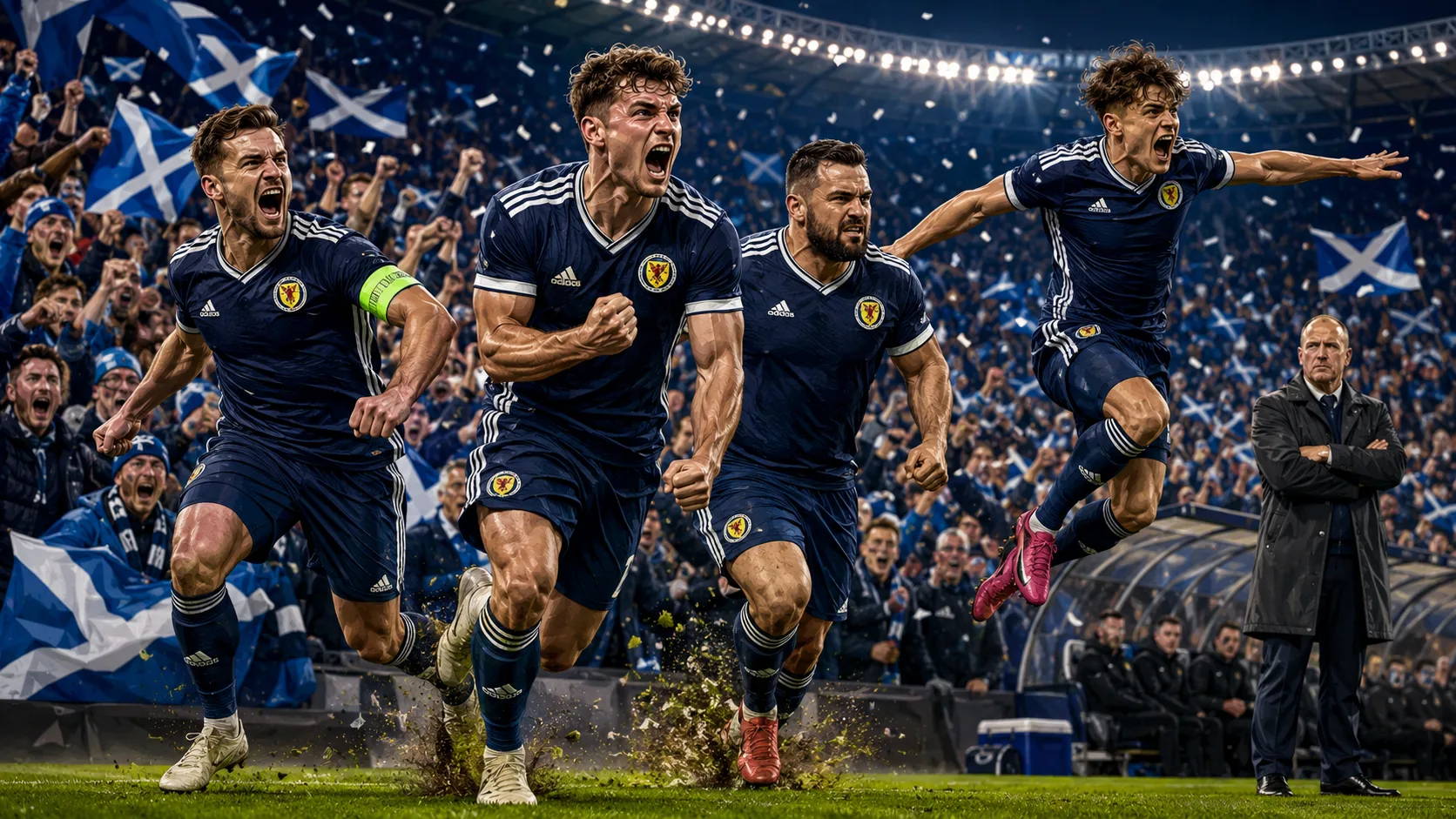
Team Overview
Scotland arrive at World Cup 2026 with a squad built on loyalty, structure and collective belief. Clarke has rarely been a coach who chases glamour. His success has come from creating a clear framework, trusting players who understand their roles and building a side that is hard to beat even when performance levels are not at their cleanest.
The group contains enough quality to make qualification difficult. Brazil remain one of the world’s most dangerous attacking teams, Morocco have the confidence of recent global and African success, and Haiti play with speed and emotion. Scotland cannot expect to dominate every match, but they can compete by turning games into physical, tactical and psychological tests.
The opening win over Haiti gave them exactly the kind of platform they needed. It was not a fluent display, but tournament football often rewards teams that find a way. Scotland have often left World Cups with regret after narrow margins went against them. This time, they began by putting points on the board.
The identity is familiar: strong central midfielders, experienced defenders, aggressive wide support, direct attacking phases and enormous commitment without the ball. Scotland are unlikely to be the most stylish team in Group C, but they may be one of the most awkward opponents if they stay compact and make set pieces count.
World Cup History
Scotland’s World Cup history is full of tension, romance and frustration. Between the 1970s and 1990s, they were regulars at the finals, qualifying for six out of seven tournaments during one golden stretch. Yet after France 1998 came a long absence that stretched across six successive failed qualification campaigns.
Their first appearance came in Switzerland in 1954, and it was a painful introduction. Poor preparation, a small travelling squad and unsuitable kit choices for the conditions contributed to a difficult campaign. Scotland lost 1-0 to Austria and were then beaten 7-0 by Uruguay, a result that remains the heaviest defeat in the national team’s history.
The 1974 World Cup is often remembered as Scotland’s strongest campaign, even though it ended in another group-stage exit. Willie Ormond’s side were unbeaten, drew with Yugoslavia and Brazil, beat Zaire 2-0 and kept three clean sheets. Remarkably, they still missed out on the next stage by goal difference. That tournament became a symbol of Scottish World Cup misfortune: good enough to avoid defeat, not quite ruthless enough to progress.
There have also been unforgettable individual moments. Archie Gemmill’s goal against the Netherlands in 1978 remains one of the most celebrated strikes in Scottish football history, even though Scotland still went out because of earlier damage against Peru and Iran. David Narey’s thunderous opener against Brazil in 1982 was another famous moment that eventually turned bittersweet when the match ended in defeat.
France 1998 was Scotland’s last appearance before 2026. Craig Brown’s team opened the tournament against Brazil, battled to a respectable 2-1 defeat, drew 1-1 with Norway and then collapsed in a 3-0 loss to Morocco. That result ended the campaign and began the long wait that this generation has finally ended.
Road to World Cup 2026
Scotland’s qualification campaign was dramatic, imperfect and unforgettable. It began with a gritty goalless draw away to Denmark and ended with one of the great modern Hampden nights: a 4-2 win over the same opponent that sealed automatic qualification in spectacular style.
The path was not smooth. Scotland had spells when performances lacked fluency, and even some victories were met with frustration by supporters. The team were booed after underwhelming home displays, and automatic qualification looked in danger when they were struggling in Athens while Denmark appeared likely to handle Belarus.
Then the picture changed. Belarus took an unexpected point in Copenhagen, giving Scotland the chance to decide their fate at Hampden. Clarke’s side seized it with goals from Scott McTominay, Lawrence Shankland, Kieran Tierney and Kenny McLean. Two of those goals arrived in stoppage time, turning tension into one of the greatest qualification celebrations in Scottish football.
The 4-2 win over Denmark did more than send Scotland to the World Cup. It confirmed that Clarke’s group can handle extreme pressure. They were not perfect, but they were resilient, opportunistic and emotionally strong. Those qualities are essential at a World Cup, especially for a nation trying to break a historical barrier.
Scotland’s qualification also continued a wider revival. Clarke has now led the national team to three major tournaments, a remarkable achievement after more than two decades without a single World Cup or European Championship appearance before his era gathered momentum.
The Coach
Steve Clarke is central to Scotland’s modern identity. He is not a theatrical manager, and his dry public style has almost become part of the national team’s character. But beneath the stony face is a coach who has given Scotland stability, belief and repeated qualification at a level previous generations could not manage.
Clarke took charge in 2019 and gradually restored credibility. He did so through pragmatism, clear roles and loyalty to players he trusts. Scotland under Clarke are not built to entertain neutrals every week. They are built to compete, suffer, stay in games and use their strengths at the right moments.
His greatest strength is consistency. Players know what is expected. The defensive framework is clear, midfield responsibilities are well understood and the senior core has been given the confidence to lead. That can make Scotland predictable, but it also makes them coherent.
The question is whether Clarke can find enough attacking flexibility. Scotland can be hard to beat, but at World Cup level they need more than defensive shape. They must carry a threat against stronger opponents and avoid becoming trapped too deep for too long.
If this is Clarke’s final tournament, his legacy is already secure. No Scotland manager has done more in the modern era to make qualification feel normal again. But one achievement remains missing: taking the country beyond the group stage. That is the prize that could elevate him from successful manager to national football legend.
Star Player
Scott McTominay has become Scotland’s most decisive modern tournament player. His rise from useful midfield option to genuine international match-winner has transformed the team’s attacking ceiling.
McTominay gives Scotland qualities that translate perfectly to tournament football. He is powerful, aggressive, tactically flexible and extremely dangerous when arriving late into the box. He can play deeper, operate as an advanced midfielder or become an auxiliary attacking threat when Scotland need bodies in the penalty area.
His goals during qualification were vital, and his presence changes how opponents defend. Teams cannot simply focus on Scotland’s strikers or wide deliveries; they must track McTominay’s runs from midfield, which is not easy when matches become stretched.
At World Cup 2026, he may be the player most capable of turning a tight game. Against elite sides, Scotland may not create many open-play chances. McTominay’s timing, aerial strength and appetite for pressure moments could be the difference between brave defeat and historic progress.
One to Watch
Ben Gannon-Doak gives Scotland something different. The young winger has pace, directness and a willingness to attack defenders that can lift a team when matches become flat.
Scotland have often been accused of lacking imagination in the final third. Gannon-Doak helps address that. He can carry the ball up the pitch, win territory, draw fouls and force defenders to retreat. Even if he does not start every match, his impact from the bench could be significant.
His energy was evident in the early stages of the tournament, where his direct running gave Scotland a rare spark during a tense performance. He is still developing, and decision-making at World Cup level will be tested, but his fearlessness is valuable.
In a group featuring Brazil and Morocco, Scotland will need moments of pace and unpredictability. Gannon-Doak is one of the players who can provide them.
Unsung Hero
John McGinn is famous enough in Scottish football, but his tactical importance can still be underappreciated. He is not always elegant, and he does not always dominate in obvious ways, but he repeatedly appears in the moments that matter.
McGinn’s value lies in his strength, timing, intelligence and ability to turn pressure into territory. He can protect the ball, win fouls, arrive around the box and give Scotland emotional momentum. When matches become messy, he often looks more comfortable rather than less.
He also brings leadership. In a tournament where Scotland are trying to carry decades of expectation, players like McGinn are vital. He understands the weight of the shirt, but he rarely appears overwhelmed by it.
His goal against Haiti underlined his knack for decisive contributions. Scotland did not play beautifully, but McGinn delivered. That is exactly why Clarke has trusted him for so long.
Tactical Style and What to Expect
Scotland’s tactical style under Clarke is pragmatic. They can use a back four or back five depending on the opponent, but the principles remain similar: compact defensive distances, midfield work-rate, aggressive duels, quick wide attacks and strong set-piece emphasis.
Against teams of similar level, Scotland can press higher and use their midfield runners to support the forwards. Against stronger opponents, they are more likely to defend in a compact block, protect central areas and look for transitions through wide players and second balls.
Andy Robertson remains essential on the left. His crossing, leadership and stamina give Scotland one of their most reliable attacking outlets. If Kieran Tierney is fit and involved, the relationship between Robertson and Tierney still gives Clarke flexibility on that side.
In midfield, McTominay, McGinn, Lewis Ferguson, Kenny McLean and Ryan Christie provide different profiles. Scotland can choose more energy, more control or more attacking support depending on the match. The challenge is finding enough creativity without losing defensive security.
Up front, Che Adams and Lawrence Shankland offer different options. Adams stretches, presses and links, while Shankland provides penalty-box instincts. Scotland may not create many chances against Brazil or Morocco, so their strikers must be efficient.
Strengths
- Midfield power: Scotland have several physically strong, tactically disciplined midfielders who can compete in duels and attack the box.
- Set-piece threat: With McTominay, McGinn, Tierney, Hanley, Hendry and Shankland, Scotland can cause problems from corners, free kicks and second balls.
- Managerial consistency: Clarke’s players know their roles, and that clarity can be decisive in tense tournament matches.
- Emotional resilience: The dramatic qualification win over Denmark proved this group can handle pressure and late-game chaos.
Weaknesses
- Limited creative control: Scotland can struggle to dominate possession or unlock compact opponents through technical combinations.
- Pressure on forwards: The strikers may not receive many chances, so missed opportunities can become costly.
- Defending deep for too long: Against elite opponents, Scotland can become trapped near their own box and invite sustained pressure.
- Historical burden: The national team’s failure to ever reach the knockout stage will follow them until they finally break it.
Probable Starting XI
Formation: 4-2-3-1
Angus Gunn; Aaron Hickey, Jack Hendry, Grant Hanley, Andy Robertson; Scott McTominay, Lewis Ferguson; Ben Gannon-Doak, John McGinn, Ryan Christie; Che Adams.
Clarke could adjust depending on opponent. Lawrence Shankland is a strong option if Scotland want more penalty-box presence, while Kieran Tierney, Kenny McLean, Nathan Patterson and Scott McKenna can all come into the XI depending on fitness and tactical plan.
Group Stage Fixtures
- Sunday, 14 June 2026: Haiti 0-1 Scotland — Boston Stadium, Foxborough — 05:00 MUT
- Saturday, 20 June 2026: Scotland vs Morocco — Boston Stadium, Foxborough — 02:00 MUT
- Thursday, 25 June 2026: Scotland vs Brazil — Miami Stadium, Miami — 02:00 MUT
Key Match
The key match is Scotland vs Morocco. After beating Haiti, Scotland have given themselves a chance to make the Morocco fixture a genuine qualification lever. A draw would keep them in a strong position, while a win would put them on the brink of history.
Morocco’s technical level, defensive organisation and transition quality will make that match extremely difficult. They are not only a dangerous African side; they are a modern tournament team with belief, pace and a deep run already behind them.
For Scotland, the plan must be controlled aggression. They cannot simply defend for 90 minutes, but they also cannot leave too much space. Set pieces, midfield runners and wide deliveries could decide whether they take the result they need.
Can They Qualify From The Group?
Yes, Scotland can qualify from Group C, but the path is narrow. The opening win over Haiti gives them a real platform, especially in the expanded format where the top two and the best third-placed teams can reach the Round of 32.
To progress automatically, Scotland probably need at least one more positive result. That makes the Morocco match vital. Brazil will be the hardest fixture, so Scotland will want to avoid needing a result against the five-time world champions on the final matchday.
The biggest advantage is momentum. Scotland have already cleared the emotional hurdle of returning to the World Cup and winning a match. That can free the players slightly. The biggest concern is performance level. They will need to be cleaner on the ball and more secure defensively against Morocco and Brazil than they were for long spells against Haiti.
If Scotland reach four points, qualification will be realistic. If they reach six, history is almost certain. If they remain on three, it may come down to goal difference and the wider third-place table.
Prediction
Goal.mu prediction: Scotland to finish third in Group C but remain in contention for a Round of 32 place. Their opening win gives them a chance, but Morocco and Brazil will test the limits of Clarke’s tactical structure.
Scotland’s most realistic route is four points: beat Haiti, take something from Morocco and try to keep the Brazil scoreline respectable. If they manage that, they could finally break the knockout-stage barrier. If they lose control against Morocco, the final match becomes extremely difficult.
Hot Stat
Scotland were unbeaten at the 1974 World Cup, kept three clean sheets and still went out in the group stage by goal difference — one of the clearest examples of the fine margins that have shaped their tournament history.
Final Analysis
Scotland’s World Cup return is already emotional, but the target is bigger than participation. After decades away and eight previous group-stage exits, this generation has a chance to do something no Scotland side has ever done: reach the knockout rounds.
The squad is not perfect. It lacks the elite technical quality of Brazil and the recent tournament pedigree of Morocco. But it has identity, experience, midfield strength and a coach who understands how to keep matches alive.
The key will be turning spirit into control. Scotland can fight, run and compete; now they must also manage phases of possession, reduce defensive panic and take chances when they arrive.
If McTominay, McGinn, Robertson and Gannon-Doak can provide enough attacking threat, and if Clarke’s structure holds under pressure, Scotland can make this tournament memorable for more than simply being back.
History says Scotland usually fall short. This team have already made a habit of challenging old assumptions. North America is their chance to change the story.
World Cup 2026 Team Guide Scotland return to the World Cup with a passionate support base and a squad built on intensity, physical commitment and set-piece threat. Group C gives them a difficult but high-profile challenge. World Cup 2026 All times below are shown in Mauritius Time (MUT). Group C • Foxborough, USA Group C • Foxborough, USA Group C • Miami, USA Goal.mu Predictions🏴 Scotland World Cup 2026 Fixtures, Squad & Predictions
Team P W D L GF GA GD Pts 🇧🇷 Brazil 3 2 1 0 7 1 6 7 🇲🇦 Morocco 3 2 1 0 6 3 3 7 🏴 Scotland 3 1 0 2 1 4 -3 3 🇭🇹 Haiti 3 0 0 3 2 8 -6 0 Fixtures in Mauritius Time
Sunday 14 June 2026
🇭🇹 Haiti 0 - 1🏴 Scotland
Saturday 20 June 2026
🏴 Scotland 0 - 1🇲🇦 Morocco
Thursday 25 June 2026
🏴 Scotland 0 - 3🇧🇷 Brazil
World Cup 2026 Predictions
🇲🇽 Mexico vs 🇿🇦 South Africa
🇰🇷 South Korea vs 🇨🇿 Czech Republic
🇨🇦 Canada vs 🇧🇦 Bosnia & Herzegovina
🇺🇸 USA vs 🇵🇾 Paraguay
🇶🇦 Qatar vs 🇨🇭 Switzerland
🇧🇷 Brazil vs 🇲🇦 Morocco
🇭🇹 Haiti vs 🏴 Scotland
🇦🇺 Australia vs 🇹🇷 Turkey
Important Notice for All Readers:
The content provided in this article is intended solely for informational and entertainment purposes. Betting and gambling involve significant risks, including the potential loss of the principal amount wagered. Readers should be aware of their local regulations and laws concerning online betting and gambling. Always gamble responsibly, knowing that the outcomes are unpredictable and can lead to financial losses.If you or someone you know may have a gambling problem, please seek help. Many organizations provide resources and support for individuals struggling with gambling addiction. Remember, the best bet is always a well-informed decision.Never gamble with funds that are essential for your daily life, and always set limits to ensure you’re not gambling more than you can afford to lose. The thrill of the bet should never overshadow the potential consequences of loss. Stay safe, informed, and gamble responsibly.