
Iraq at World Cup 2026: Team Preview, History, Key Players & Prediction
Iraq at World Cup 2026: Team Preview, History, Key Players & Prediction
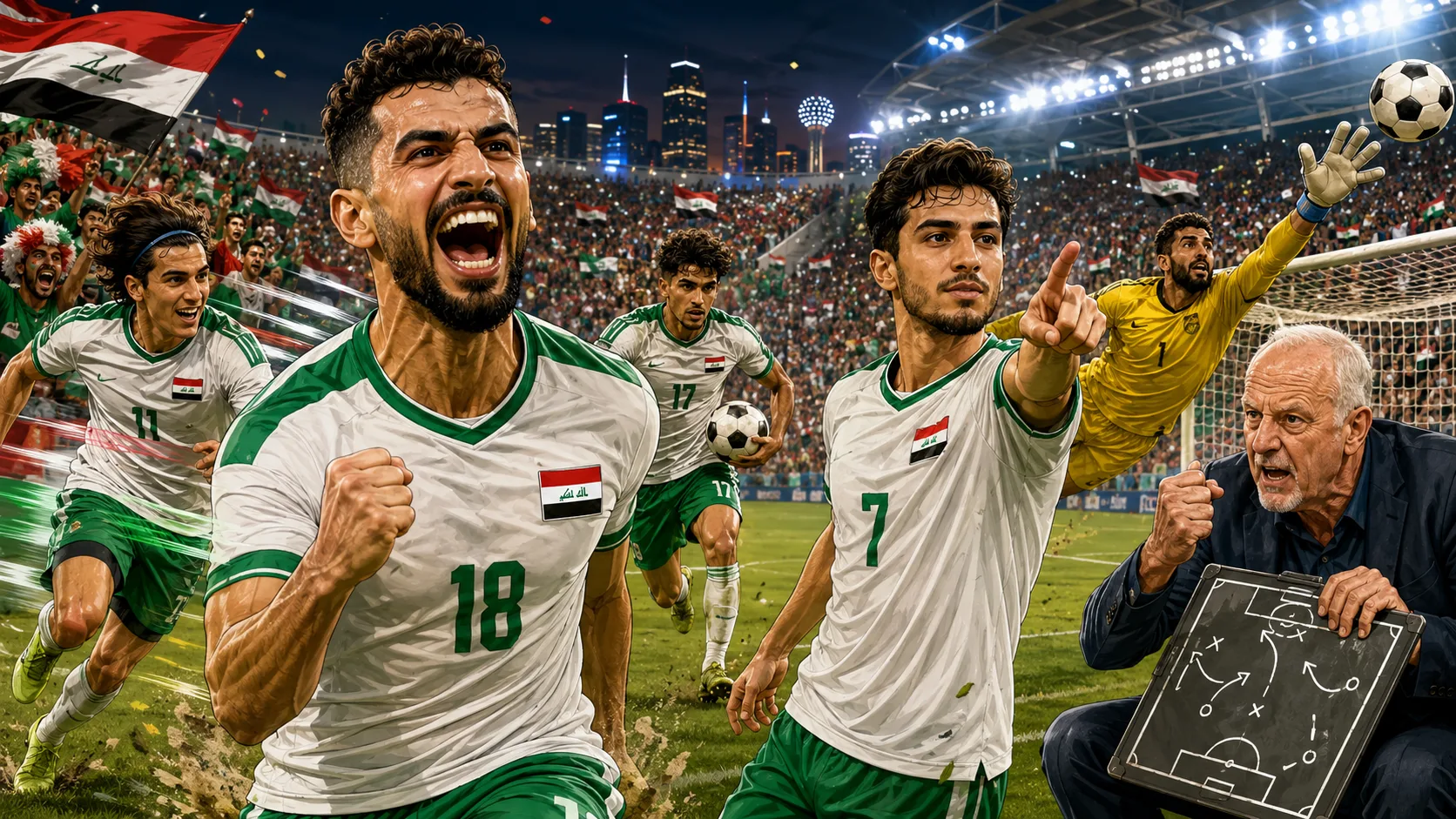
Iraq World Cup 2026 preview: the Lions of Mesopotamia return to the global stage for the first time in 40 years, with Graham Arnold turning belief, discipline and a dramatic qualification story into one of the most emotional team narratives in North America.
Iraq’s World Cup return is one of the great comeback stories of the 2026 tournament. For decades, the country’s only appearance at the finals remained Mexico 1986, a brief campaign remembered more for what it represented than what it produced on the pitch. Now, after years of frustration, managerial change, logistical disruption and immense national pressure, Iraq are back.
The scale of the achievement is enormous. When Graham Arnold arrived in 2025, the atmosphere around the national team had been damaged by a painful defeat to Palestine and the end of the Jesús Casas era. Qualification looked fragile, confidence was low and the players were carrying the weight of a football-mad nation desperate to return to the World Cup. Arnold’s task was not simply to change the shape on a tactics board. He had to change the mindset.
That is why Iraq enter Group I with nothing to lose but plenty to prove. France are tournament giants, Norway have Erling Haaland and Martin Odegaard, and Senegal bring power, experience and African pedigree. Iraq are the outsiders, but that role suits them. Their best chance is to play with courage, discipline and emotional clarity — the same qualities that took them through a brutal qualification route.
Team Overview
Iraq arrive at World Cup 2026 as one of the tournament’s most compelling underdogs. Their squad is not packed with global superstars, but it has story, resilience and an identity that has been sharpened under Arnold. This is a team that had to survive pressure, survive setbacks and survive one of the most difficult qualification journeys of any nation at the finals.
The emotional value of Iraq’s return cannot be separated from the football. Generations of Iraqi supporters have waited to see their country back on the world stage. The diaspora across the United States, Canada, Europe and the Middle East will make their presence felt, turning Iraq’s matches into moments of national connection as much as sporting events.
On the pitch, Iraq are expected to be compact, intense and direct. Arnold has used a 4-3-3 structure and has recently leaned towards a bolder 4-4-2 with two genuine strikers. The idea is clear: defend with discipline, keep the team connected, use strong wide runners and give Aymen Hussein enough service to make his physical presence count.
Iraq will not dominate possession against France, Norway or Senegal. That is not their route. Their campaign will depend on staying in matches, frustrating favourites, using set pieces well and turning isolated attacking moments into real chances. If they can keep games close after an hour, pressure may shift towards their opponents.
The biggest advantage Iraq have is freedom. France, Norway and Senegal all arrive with greater expectations. Iraq are not expected to qualify, and Arnold has made that psychological position part of the message. The group is difficult, but not emotionally impossible. Iraq can play without the same fear of failure that burdens the favourites.
World Cup History
Iraq’s World Cup history is short but meaningful. Their only previous appearance came in 1986, when Mexico hosted the tournament. That campaign ended in the group stage without a point, but simply reaching the finals was a landmark achievement for Iraqi football.
The 1986 side faced Paraguay, Belgium and Mexico. Iraq lost all three matches and scored once, but the qualification itself created a reference point for every generation that followed. For 40 years, Iraqi football lived with the question of when the national team would return.
That wait became heavier with each failed campaign. Iraq produced talented players, memorable Asian Cup moments and passionate domestic football culture, but the World Cup remained out of reach. The longer the absence lasted, the more powerful the dream became.
World Cup 2026 therefore carries a different emotional weight. Iraq are not returning as a nation used to regular participation. They are returning after four decades of longing, with supporters who have grown up hearing about 1986 rather than experiencing a World Cup campaign themselves.
The opportunity now is to create new memories. Iraq have never won a World Cup match, never kept a finals clean sheet and never advanced beyond the group stage. Every point in North America would represent progress. A win would be historic. A knockout-place push would become one of the stories of the tournament.
Road to World Cup 2026
Iraq’s road to World Cup 2026 was full of stress, drama and late emotion. The campaign began with promise, then nearly collapsed after the 2-1 defeat to Palestine. That result triggered the end of Casas’s reign and left the squad mentally fragile.
Arnold arrived with a simple message: belief had to return before results could follow. He needed players to accept discipline, trust the collective and understand that qualification was still possible. The tactical adjustment mattered, but the mental reset mattered even more.
The decisive moment came in Basra against the United Arab Emirates, when Iraq needed victory to keep the dream alive and reach the Inter-Confederation playoff. With the match level deep into stoppage time, Iraq were awarded a penalty after VAR intervention. Amir Al-Ammari showed remarkable nerve, waited for the goalkeeper’s movement and converted the kick that sent the nation into celebration.
That penalty did more than win a match. It changed the emotional temperature around the team. Suddenly, belief was no longer just a word on a dressing-room board. It was real, visible and shared across the country.
The final obstacle was Bolivia in Monterrey. Preparation was complicated by regional conflict, airspace closures and disrupted travel. Iraq’s squad had to endure an exhausting journey before reaching Mexico, but they still found a way. Hussein scored the decisive goal in a 2-1 victory, securing the 48th and final place at the World Cup.
The story was almost cinematic: a coach appointed in crisis, a nation carrying 40 years of frustration, a stoppage-time penalty, a chaotic journey and a striker scoring the goal that changed everything. It is difficult to imagine a more emotional route to North America.
The Coach
Graham Arnold is the architect of Iraq’s revival. His appointment was unexpected, but his profile made sense. He had already taken Australia to the 2022 World Cup through the pressure of playoffs and had guided the Socceroos into the knockout stage. Iraq needed exactly that type of tournament realism.
Arnold is not a coach who builds purely around style. His strength is clarity. He wants structure, discipline and players who understand what the game requires. With Iraq, he has focused heavily on mindset, responsibility and collective standards.
His tactical work has evolved. The 4-3-3 gave Iraq balance and a familiar structure, but the later use of a 4-4-2 showed bravery. Pairing two strikers can give Iraq a better release against strong opponents, especially when they are forced to defend deep and need to turn clearances into attacks.
Arnold’s public message has also been clever. He has framed Group I as an opportunity rather than a punishment. France, Norway and Senegal have the pressure; Iraq have the chance to shock the world. That psychological framing can free players who might otherwise be overwhelmed by the stage.
His greatest challenge now is tournament management. Iraq cannot chase every match emotionally. They need to know when to press, when to sit, when to slow the game and when to attack. Arnold’s experience could be crucial in helping them stay calm in moments when the crowd, the occasion and the scoreline threaten to take over.
Star Player
Aymen Hussein is Iraq’s star player, emotional symbol and main goal threat. His journey with the national team has been anything but smooth. He has faced criticism, mockery and pressure, but he has emerged as the striker who delivered Iraq back to the World Cup.
Hussein’s importance is tactical as well as symbolic. He gives Iraq a focal point. In matches where they may have limited possession, that is essential. Long passes, crosses and set pieces need a target, and Hussein provides physical presence, aerial strength and penalty-box instinct.
His winning goal against Bolivia turned him into a national hero. It was the kind of moment that changes how a player is remembered. For years, Iraqi supporters questioned him. Now, he enters the World Cup as the forward who completed the 40-year dream.
At tournament level, Hussein’s finishing will be under intense scrutiny. Iraq may not create many chances in Group I. Against France, Norway and Senegal, one header, one loose ball or one penalty-box touch could be the difference between defeat and history.
His best role is not only to score. He must occupy centre-backs, win duels, bring midfielders into play and help Iraq escape pressure. If Hussein can make the ball stick high up the pitch, Iraq will have a route to breathe during difficult spells.
One to Watch
Marko Farji is Iraq’s one to watch. Born and developed in Norway, he brings a different football education and a fascinating personal storyline to Group I, where Iraq open against the country of his upbringing.
Farji’s early development was built around dribbling, flair and technical confidence. His breakthrough in Norway’s Eliteserien, followed by a move to Venezia, has made him one of the more intriguing young players in the Iraq squad.
For Iraq, he offers speed and directness in wide areas. That matters because Arnold’s team need players who can carry the ball forward when the defensive block wins possession. Farji can help turn survival into counter-attack.
His mental development may be just as important. Earlier setbacks in youth football forced him to toughen up, and that resilience fits the wider tone of this Iraq team. He is still only 22, but the World Cup is exactly the type of stage where an emerging player can become known beyond his usual audience.
If Iraq are to trouble stronger opponents, Farji’s running and bravery could be decisive from the start or from the bench. He does not need to dominate full matches. He needs to provide moments of acceleration when the favourites have pushed too many players forward.
Unsung Hero
Amir Al-Ammari is the unsung hero. Every team needs a player who brings rhythm, calm and responsibility, and for Iraq that role belongs to the Swedish-born midfielder.
Al-Ammari’s late penalty against the UAE was one of the defining moments of qualification, but his value goes beyond that single kick. He has developed into a modern No 6 who can organise possession, screen the defence and make sensible decisions under pressure.
His journey has included setbacks, including painful memories from the Asian Cup defeat to Jordan, when a mistake led to a damaging goal. The ability to recover from that and then take such a decisive penalty in qualification says plenty about his character.
At World Cup level, Al-Ammari’s role will be demanding. Iraq will spend long spells without the ball, and he must protect the centre-backs, track runners and help the team escape pressure with clean passes. Against Norway, that means denying service into Haaland and Odegaard. Against France, it means protecting central spaces. Against Senegal, it means matching intensity.
He may not produce highlight-reel moments, but he could be the player who keeps Iraq’s structure alive.
Tactical Style and What to Expect
Iraq under Arnold are expected to be disciplined, compact and emotionally aggressive without becoming reckless. The base can shift between a 4-3-3 and 4-4-2, but the principles are consistent: protect central spaces, work hard without the ball, use wide outlets and create enough service for the strikers.
The 4-4-2 gives Iraq a simple counter-attacking platform. Hussein and Ali Al-Hamadi can occupy centre-backs, while wide players such as Ali Jasim, Ibrahim Bayesh and Farji provide speed around them. The risk is that midfield can be outnumbered against stronger teams, so Arnold may use a more cautious structure depending on opponent.
The 4-3-3 gives Iraq an extra midfielder and may be useful against France or Norway. Zidane Iqbal’s technical ability, Al-Ammari’s control and Kevin Yakob’s energy could help Iraq survive central pressure. The challenge is maintaining a real attacking outlet if Hussein becomes isolated.
Set pieces will be important. Iraq have physical presence and players capable of attacking crosses. Against teams with more possession, corners and free kicks may become their best route to goal. They must also avoid conceding cheap set pieces, especially against Senegal’s aerial power and Norway’s height.
Defensively, Iraq must avoid long periods of chaos. They can accept pressure, but not panic. The distances between defence and midfield must remain tight, and the full-backs must be careful when stepping out. Against players like Mbappe, Haaland and Mane, one poorly timed movement can become a goal.
Strengths
- Emotional momentum: Iraq’s qualification story has created enormous belief inside the squad and among supporters.
- Experienced tournament coach: Graham Arnold understands playoff pressure, underdog preparation and World Cup match management.
- Physical striker profile: Aymen Hussein gives Iraq a clear focal point for crosses, set pieces and direct attacks.
- Strong national support: Iraqi fans and the diaspora will bring major energy to the group matches in North America.
Weaknesses
- Difficult group: France, Norway and Senegal each have elite individuals and greater tournament expectations.
- Limited possession control: Iraq may struggle to keep the ball for long periods against high-level opponents.
- Pressure on chance conversion: They are unlikely to create many clear chances, so missed opportunities could be costly.
- Defensive workload: The back line and midfield screen will be tested repeatedly by world-class attackers.
Probable Starting XI
Formation: 4-4-2
Jalal Hassan; Hussein Ali, Zaid Tahseen, Rebin Sulaka, Merchas Doski; Marko Farji, Amir Al-Ammari, Zidane Iqbal, Ali Jasim; Aymen Hussein, Ali Al-Hamadi.
Arnold can adjust this shape depending on the opponent. A 4-3-3 with Ibrahim Bayesh, Ahmed Qasem or Kevin Yakob in midfield would offer more protection, while Mohanad Ali gives Iraq another forward option if they need fresh legs or a different penalty-box profile.
Group Stage Fixtures
- Wednesday, 17 June 2026: Iraq vs Norway — Boston Stadium, Foxborough — 02:00 MUT
- Tuesday, 23 June 2026: France vs Iraq — Philadelphia Stadium, Philadelphia — 01:00 MUT
- Friday, 26 June 2026: Senegal vs Iraq — Toronto Stadium, Toronto — 23:00 MUT
Key Match
The key match is Iraq vs Norway. It is the opener, and it may also be Iraq’s best chance to shape their campaign before facing France and Senegal. Norway are favourites, but they carry pressure because this is the first World Cup stage for Haaland and Odegaard.
If Iraq can take a point, the group changes immediately. The squad would gain belief, opponents would view them differently and Arnold’s message about playing without fear would gain real evidence. If Iraq lose heavily, the France match becomes extremely difficult psychologically.
Norway’s main threat is obvious: service into Haaland, with Odegaard controlling the supply. Iraq must defend crosses, stop through balls and avoid allowing Norway to build repeated waves of pressure. Their own attacking moments may come through Hussein’s aerial work and quick support from Ali Jasim or Farji.
Can They Qualify From The Group?
Iraq can dream of qualification, but the path is extremely difficult. Group I contains France, one of the tournament favourites; Norway, with a world-class attacking spine; and Senegal, one of Africa’s strongest sides. Iraq are rightly the outsiders.
However, the expanded format gives them a reason to believe. The top two qualify automatically, and the best third-placed teams can also advance. That means one win and a competitive goal difference could keep Iraq alive. Four points would give them a real chance. Three points might be enough only if results elsewhere are favourable.
The most realistic path is to take something from Norway and then target the Senegal match as a possible decisive fixture. France will be the hardest game, and damage limitation may matter there if the group comes down to goal difference.
To qualify, Iraq need three things: Hassan and the defence must produce heroic performances, Al-Ammari and Iqbal must keep enough possession to relieve pressure, and Hussein must be ruthless when chances arrive. Without those elements, the group may simply be too strong.
Prediction
Goal.mu prediction: Iraq to finish fourth in Group I, but to compete bravely and make at least one match uncomfortable for a stronger opponent.
This prediction is not a dismissal of Iraq’s quality or spirit. It is a reflection of the group. France, Norway and Senegal all possess elite players who can decide tight matches. Iraq’s best chance is to turn one of those fixtures into a low-scoring battle and take a historic point.
If Iraq reach the final match against Senegal still alive, their campaign will already have exceeded many expectations. If they win a match, it will become one of the great moments in Iraqi football history. The odds are against them, but this team has already built its identity around defying expectation.
Hot Stat
Iraq are appearing at the World Cup for only the second time, and their first appearance since 1986 — ending a 40-year wait for a return to the finals.
Final Analysis
Iraq’s World Cup 2026 story is about more than tactics. It is about a nation returning to the global football stage after four decades, a squad rebuilt under pressure and a coach who convinced players that belief could become action.
Arnold has given Iraq structure, courage and a clear underdog identity. Hussein gives them a focal point. Al-Ammari gives them composure. Farji gives them youthful energy. The supporters will give them emotion.
The problem is the strength of Group I. France, Norway and Senegal are all dangerous in different ways. France can control and explode. Norway can feed Haaland. Senegal can dominate duels and transitions. Iraq will have little margin for error in every match.
Yet World Cups are built on teams who arrive with impossible dreams and make favourites uncomfortable. Iraq may not qualify, but they can still leave North America with pride, progress and perhaps a historic result.
Their mission is simple: stay organised, play without fear and make 46 million people proud. After the road they travelled to get here, Iraq have already shown that belief can survive almost anything.
World Cup 2026 Team Guide
🇮🇶 Iraq World Cup 2026 Fixtures, Squad & Predictions
Iraq return to the World Cup after a long absence, making their 2026 campaign one of the most emotional Asian football stories. Group I is difficult, but the achievement of qualification is already significant.
| Team | P | W | D | L | GF | GA | GD | Pts |
|---|---|---|---|---|---|---|---|---|
| 🇳🇴 Norway | 1 | 1 | 0 | 0 | 4 | 1 | 3 | 3 |
| 🇫🇷 France | 1 | 1 | 0 | 0 | 3 | 1 | 2 | 3 |
| 🇸🇳 Senegal | 1 | 0 | 0 | 1 | 1 | 3 | -2 | 0 |
| 🇮🇶 Iraq | 1 | 0 | 0 | 1 | 1 | 4 | -3 | 0 |
World Cup 2026
Fixtures in Mauritius Time
All times below are shown in Mauritius Time (MUT).
Wednesday 17 June 2026
🇮🇶 Iraq 1 - 4 🇳🇴 Norway
Group I • Foxborough, USA
Foxborough StadiumTuesday 23 June 2026
🇫🇷 France vs 🇮🇶 Iraq
Group I • Philadelphia, USA
Philadelphia StadiumFriday 26 June 2026
🇸🇳 Senegal vs 🇮🇶 Iraq
Group I • Toronto, Canada
Toronto StadiumGoal.mu Predictions
World Cup 2026 Predictions
🇲🇽 Mexico vs 🇿🇦 South Africa
🇰🇷 South Korea vs 🇨🇿 Czech Republic
🇨🇦 Canada vs 🇧🇦 Bosnia & Herzegovina
🇺🇸 USA vs 🇵🇾 Paraguay
🇶🇦 Qatar vs 🇨🇭 Switzerland
🇧🇷 Brazil vs 🇲🇦 Morocco
🇭🇹 Haiti vs 🏴 Scotland
🇦🇺 Australia vs 🇹🇷 Turkey
The content provided in this article is intended solely for informational and entertainment purposes. Betting and gambling involve significant risks, including the potential loss of the principal amount wagered. Readers should be aware of their local regulations and laws concerning online betting and gambling. Always gamble responsibly, knowing that the outcomes are unpredictable and can lead to financial losses.If you or someone you know may have a gambling problem, please seek help. Many organizations provide resources and support for individuals struggling with gambling addiction. Remember, the best bet is always a well-informed decision.Never gamble with funds that are essential for your daily life, and always set limits to ensure you’re not gambling more than you can afford to lose. The thrill of the bet should never overshadow the potential consequences of loss. Stay safe, informed, and gamble responsibly.