
World Cup 2026 Group F Preview: Teams, Fixtures, Key Players & Prediction
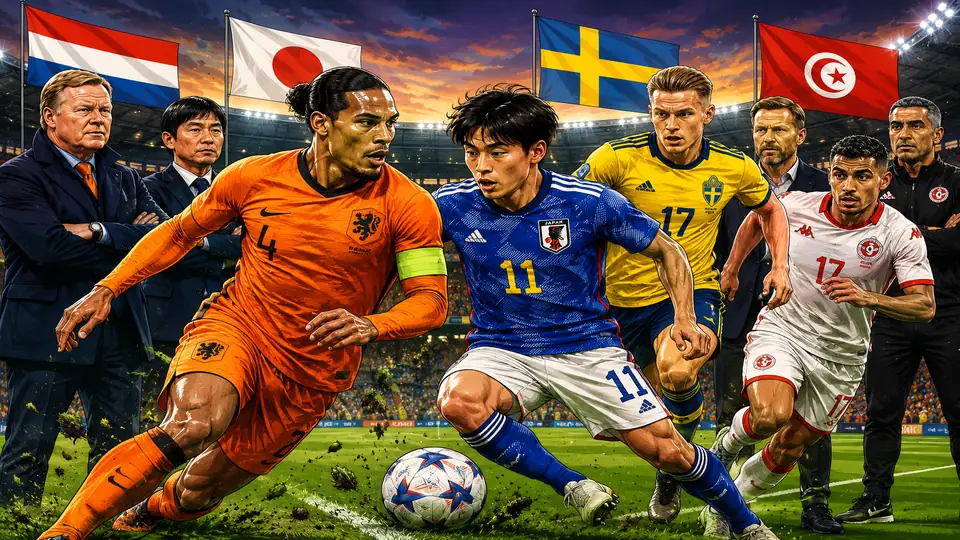
World Cup 2026 Group F preview: Netherlands, Japan, Sweden and Tunisia meet in one of the most competitive early sections of the tournament, with a traditional European heavyweight, Asia’s most reliable World Cup performer, a dangerous Swedish attack and a disciplined Tunisian side all chasing the Round of 32.
This World Cup 2026 Group F preview gives Goal.mu readers a complete look at the teams, fixtures in Mauritius time, key players, tactical battles, qualification routes and predicted final standings. The Netherlands start as favourites, but Japan have the structure and momentum to challenge them. Sweden bring a powerful attacking pairing, while Tunisia are aiming to finally break their long World Cup group-stage barrier.
Group F is difficult to call because the ranking gap does not fully explain the tactical danger in the section. The Netherlands have the strongest squad on paper, but they are not flawless. Japan are technically organised and extremely well-drilled. Sweden can hurt any opponent through direct forward play, and Tunisia’s defensive discipline can make matches uncomfortable. With the expanded World Cup format allowing the top two teams and the eight best third-placed sides to progress, every point in Group F could matter.
World Cup 2026 Group F Teams
World Cup 2026 Group F features Netherlands, Japan, Sweden and Tunisia. The group has a clear favourite in the Netherlands, but the battle behind them is highly competitive. Japan look like the most balanced challenger, Sweden carry serious attacking threat, and Tunisia have enough defensive quality to frustrate the favourites if they keep matches tight.
- Netherlands World Cup 2026 team profile
- Japan World Cup 2026 team profile
- Sweden World Cup 2026 team profile
- Tunisia World Cup 2026 team profile
World Cup 2026 Group F Fixtures in Mauritius Time
The Group F schedule begins with the Netherlands facing Japan in Arlington, a match that could immediately shape the race for top spot. Sweden then meet Tunisia in Mexico, before the second matchday brings Netherlands vs Sweden and Tunisia vs Japan. The final round has Japan vs Sweden and Tunisia vs Netherlands at the same time. All times below are listed in Mauritius time for Goal.mu readers.
| Match | Fixture | MUT | Venue |
|---|---|---|---|
| G011 | Netherlands vs Japan | Mon 15 Jun 2026, 00:00 MUT | Dallas Stadium, Arlington |
| G012 | Sweden vs Tunisia | Mon 15 Jun 2026, 06:00 MUT | Monterrey Stadium, Guadalupe |
| G035 | Netherlands vs Sweden | Sat 20 Jun 2026, 21:00 MUT | Houston Stadium, Houston |
| G036 | Tunisia vs Japan | Sun 21 Jun 2026, 08:00 MUT | Monterrey Stadium, Guadalupe |
| G063 | Japan vs Sweden | Fri 26 Jun 2026, 03:00 MUT | Dallas Stadium, Arlington |
| G064 | Tunisia vs Netherlands | Fri 26 Jun 2026, 03:00 MUT | Kansas City Stadium, Kansas City |
Follow the latest standings during the tournament here: View Group F table.
World Cup 2026 Group F Preview: Why This Group Matters
The World Cup 2026 Group F preview matters because this is not a group with one favourite and three passive challengers. The Netherlands are expected to win it, but Japan and Sweden both have realistic arguments for qualification, while Tunisia are exactly the kind of opponent that can turn a group into a grind.
The Netherlands enter the tournament with major pedigree but also pressure. They have reached three World Cup finals without lifting the trophy, and their modern tournament record includes deep runs as well as painful setbacks. Ronald Koeman has enough quality to build a serious side, but the Oranje must prove that their defensive strength and midfield control can become a complete tournament package.
Japan are one of the most consistent World Cup teams outside Europe and South America. The Samurai Blue have reached recent knockout stages, but their next ambition is to go beyond the Round of 16. Their tactical organisation, technical security and pressing identity make them a dangerous side in any group.
Sweden are fascinating because their qualification path was complicated, yet their attacking options are strong. Viktor Gyokeres and Alexander Isak give them a forward threat that many higher-ranked teams would envy. If Graham Potter gets the balance right, Sweden can challenge both Japan and the Netherlands.
Tunisia are the underdogs, but they are not soft opposition. Their defensive qualifying record was excellent, and they have experienced players who understand tournament football. Their biggest problem is turning defensive structure into enough attacking output.
Netherlands World Cup 2026 Group F Preview
The Netherlands start Group F as favourites. They have the highest ranking, the strongest squad depth and the best tournament pedigree in the section. However, this is a group where reputation alone will not be enough. Japan can press and combine, Sweden can attack directly, and Tunisia can make games narrow and frustrating.
Ronald Koeman’s side are built around a strong defensive core. Virgil van Dijk remains the symbolic leader and the star player for this Netherlands team. His aerial dominance, positioning, passing range and authority are vital. In a group with Sweden’s forward power and Japan’s movement, Van Dijk’s leadership will be essential.
The Netherlands also have excellent defensive options around him. Nathan Ake, Micky van de Ven, Denzel Dumfries, Jurrien Timber and other profiles give Koeman flexibility across a back four or back three. That defensive base is one reason the Oranje are expected to top the group.
Midfield control is another major strength. Frenkie de Jong gives the team press resistance and rhythm, while Tijjani Reijnders and Ryan Gravenberch can carry the ball and connect phases. If the Dutch midfield controls the tempo, their attackers should receive the ball in better areas.
In attack, Cody Gakpo, Memphis Depay, Donyell Malen and other options give the Netherlands variety. They can attack wide, combine centrally or look for runners behind the defence. The concern is whether they can turn possession into enough clear chances against compact teams.
The opening match against Japan is the most important early test. Win it, and the Netherlands take control of the group. Draw or lose it, and the Sweden fixture becomes far more demanding. The Oranje have enough quality to finish first, but they must start with intensity rather than assuming the group will follow the ranking table.
Japan World Cup 2026 Group F Preview
Japan are the most reliable challenger to the Netherlands in Group F. Their World Cup consistency has improved significantly over the past two decades, and they now arrive with the confidence of a nation that expects to compete with high-level opponents rather than merely survive them.
Hajime Moriyasu has built Japan into a tactically mature side. They press well, circulate the ball quickly and understand how to change the rhythm of a match. Even without injured attacking stars such as Kaoru Mitoma and Takumi Minamino, Japan still have enough technical quality to threaten any opponent in the group.
Takefusa Kubo is the star player. His close control, creativity, left-footed delivery and ability to operate between lines make him Japan’s most important attacking reference. In tight matches against the Netherlands and Sweden, Kubo may need to create the decisive moment from limited space.
Wataru Endo gives Japan leadership and midfield balance. His defensive discipline, ball-winning ability and experience are crucial because Group F contains different types of threats. Against the Netherlands, he must help protect central zones. Against Sweden, he must compete physically. Against Tunisia, he must help Japan avoid frustration and keep the tempo moving.
Japan’s defensive structure is also strong. Takehiro Tomiyasu, Ko Itakura and Hiroki Ito give the back line high-level experience and versatility. Zion Suzuki provides an athletic goalkeeping presence. Japan are not simply an attacking technical side; they are organised enough to win tight tournament matches.
The opening match against the Netherlands is difficult but also an opportunity. A draw would be a strong result. A win would make Japan serious contenders to top the group. Their key fixture may still be the final match against Sweden, but a positive start could change the entire section.
Sweden World Cup 2026 Group F Preview
Sweden enter Group F as a dangerous outsider. Their qualification route may not have been smooth, but their squad contains enough attacking quality to worry every opponent. Under Graham Potter, they will hope to combine structure with a more progressive attacking plan.
The headline name is Viktor Gyokeres, who is Sweden’s star player in this preview. His power, movement, finishing and ability to occupy centre-backs make him a constant threat. He can run channels, hold the ball and attack the penalty area with aggression. In a group where small margins matter, a striker in form can change everything.
Alexander Isak gives Sweden another elite attacking profile. If he is fully sharp, the partnership or rotation with Gyokeres becomes one of the most dangerous attacking situations in Group F. Anthony Elanga can add speed from wide areas, while Lucas Bergvall gives the midfield youthful energy and technical promise.
Victor Lindelof’s experience in defence and leadership will be important. Sweden cannot rely only on attacking talent. Against Japan, they will need discipline and patience. Against the Netherlands, they must avoid being stretched by Dutch midfield movement. Against Tunisia, they must find a way through a compact defensive block.
The Sweden vs Tunisia opener is a must-not-lose fixture, but Sweden will view it as a must-win match. Three points there would give them a platform before facing the Netherlands. If they fail to beat Tunisia, the final match against Japan may become an extremely high-pressure qualification battle.
Sweden’s biggest strength is forward power. Their biggest concern is consistency and midfield control. They can score against anyone, but they must prove they can manage tournament matches without becoming too open.
Tunisia World Cup 2026 Group F Preview
Tunisia arrive as the lowest-ranked side in Group F, but they have enough defensive organisation to make life difficult for their rivals. The challenge is familiar: Tunisia have appeared at several World Cups but have never reached the knockout stage. World Cup 2026 gives them another chance to break that barrier.
Sabri Lamouchi’s side are likely to prioritise compactness, central protection and quick transitions. Tunisia’s qualifying campaign showed defensive strength, but the World Cup will demand more attacking efficiency. In a group containing Netherlands, Japan and Sweden, Tunisia cannot afford to defend well and still fail to score.
Ellyes Skhiri is the star player and captain. His role as a midfield connector is crucial. He protects the defence, keeps possession moving and gives Tunisia experience in difficult phases. Against Japan and the Netherlands, his positioning will be vital. Against Sweden, his physical duel with the Swedish midfield may decide whether Tunisia can stay in the match.
Hannibal Mejbri gives Tunisia energy and attacking personality. If he receives the ball in advanced areas, he can carry possession and draw fouls. Tunisia will need players like him to turn defensive recoveries into real attacking moments rather than simply clearing pressure.
The opening fixture against Sweden is Tunisia’s best chance to change the group. A win would transform their campaign. A draw would keep them alive. A defeat would leave them needing a result against Japan or the Netherlands, which is a far more difficult route.
Tunisia’s biggest strength is defensive discipline. Their biggest concern is chance creation. If they can score first in any match, they can become very awkward opponents. If they chase games, the group may expose their limitations.
Key Players to Watch in Group F
Virgil van Dijk is the most influential defensive player in Group F. He gives the Netherlands leadership, aerial authority and calm in possession. Against Sweden’s forwards, his duel could be one of the most important tactical battles in the group.
Takefusa Kubo is Japan’s creative spark. With Mitoma and Minamino unavailable, Kubo’s ability to create chances becomes even more important. Japan need his final pass, dribbling and set-piece quality to break through tight defensive shapes.
Viktor Gyokeres is Sweden’s key attacking weapon. His physical profile and finishing make him difficult to defend. If Sweden qualify, there is a strong chance Gyokeres will have played a decisive role.
Ellyes Skhiri is Tunisia’s midfield anchor. He may not produce the most spectacular highlights, but his ability to connect defence and midfield is central to Tunisia’s survival plan. If he performs well, Tunisia can stay competitive.
Other key players include Cody Gakpo and Frenkie de Jong for the Netherlands, Wataru Endo and Ritsu Doan for Japan, Alexander Isak and Anthony Elanga for Sweden, and Hannibal Mejbri for Tunisia. Group F has star names, but it may be decided by structure, midfield control and efficiency.
Key Fixture: Japan vs Sweden
The key fixture in Group F is Japan vs Sweden. The Netherlands are expected to finish top, and Tunisia may find the group difficult, which means Japan and Sweden could be competing directly for the second automatic qualification spot. Their final-round meeting in Arlington has the feel of a knockout match inside the group stage.
Japan will likely try to control the tempo through midfield and quick passing combinations. Sweden will look to use their forward power, especially through Gyokeres and Isak. The tactical contrast is clear: Japan’s organisation and technical rhythm against Sweden’s physical attacking threat.
If Japan enter the final match ahead of Sweden, they may be comfortable with a draw. If Sweden need to win, the game could become open and dramatic. Goal difference may also influence the way both teams approach it.
This fixture could decide second place, third place and potentially the knockout route. It is the match every Goal.mu reader should mark as the decisive Group F battle.
Tactical Battle in Group F
The tactical battle in Group F is built around four different identities. The Netherlands want control and balanced attacking pressure. Japan want tempo, pressing and technical combinations. Sweden want direct forward power and attacking efficiency. Tunisia want compact defending and selective transitions.
Netherlands vs Japan will test Dutch possession against Japanese pressing. If Japan disrupt the Dutch build-up, the opener could become far more even than the ranking suggests. If the Netherlands bypass the press, they can create space for Gakpo, Depay and their runners.
Sweden vs Tunisia is a pressure match for Sweden. Tunisia will likely defend narrow and make Sweden work for chances. Sweden must avoid frustration and use width, set pieces and forward movement intelligently.
Netherlands vs Sweden will be shaped by the Dutch defence against Sweden’s forwards. Van Dijk and the Dutch back line must control Gyokeres and Isak, while Sweden must stop the Netherlands from dominating central midfield.
Tunisia vs Japan could become a patience test. Japan may have more of the ball, but Tunisia will try to keep the game tight. Japan need quick movement and sharp finishing to avoid being dragged into a low-scoring battle.
Qualification Route and Predicted Points Target
The Netherlands should target seven points. A win over Japan would put them in a commanding position, while a win against Sweden or Tunisia should secure qualification. Six points may be enough to win the group, but seven would provide control.
Japan’s cleanest route is to avoid defeat against the Netherlands, beat Tunisia and then manage the Sweden match. Four points could be enough for a third-place route, but six points would give them a strong chance of automatic qualification.
Sweden likely need to beat Tunisia and then take something from either the Netherlands or Japan. Their attacking quality gives them a chance, but their margin for error is small.
Tunisia need a result against Sweden to stay alive. A draw gives them hope. A win changes everything. Without points in the opener, their path becomes extremely difficult.
| Team | Main Strength | Main Concern | Qualification Chance |
|---|---|---|---|
| Netherlands | Defensive leadership, midfield quality and squad depth | Chance creation and consistency | High |
| Japan | Organisation, pressing and technical control | Missing key attacking players | High |
| Sweden | Powerful forward options and direct threat | Midfield control and defensive balance | Medium to High |
| Tunisia | Defensive discipline and midfield experience | Scoring enough goals | Low to Medium |
Possible Surprise Team in Group F
Sweden are the possible surprise team in Group F. Japan look more stable, but Sweden have the attacking weapons to change matches quickly. If Gyokeres and Isak click, Sweden can beat Japan and push the Netherlands harder than expected.
The risk with Sweden is balance. If they cannot control midfield, they may become too reliant on moments from their forwards. However, tournament football often rewards teams with decisive attackers, and Sweden have two of the most dangerous forwards in the group.
Tunisia can also surprise if they beat Sweden in the opener. That result would make the group far more complicated and immediately put pressure on Sweden and Japan. However, over three matches, Sweden are the more realistic surprise candidate.
Biggest Risk in Group F
The biggest risk belongs to Japan and Sweden because their direct battle may decide qualification. Japan have the structure, but injuries to key attackers could reduce their final-third threat. Sweden have the forwards, but they must prove they can control matches against organised opponents.
The Netherlands risk starting slowly. If they draw or lose against Japan, they may face Sweden under pressure. Tunisia’s risk is familiar: defending well but failing to produce enough goals. In a group this tight, one missed chance or one defensive lapse can decide the standings.
Predicted Final Group F Standings
The Netherlands should win Group F because they have the best defensive leader, the strongest squad depth and enough attacking options to manage three very different opponents. Japan look like the best pick for second place because their organisation and technical structure make them more reliable across the group stage. Sweden have the forward power to push hard for second or a third-place route, while Tunisia may compete well but struggle to collect enough points.
- Netherlands
- Japan
- Sweden
- Tunisia
Prediction: Netherlands to win Group F, Japan to qualify in second place, Sweden to fight for a possible third-place route and Tunisia to remain competitive but finish fourth.
Final World Cup 2026 Group F Prediction
This World Cup 2026 Group F preview points towards the Netherlands and Japan as the safest automatic qualification picks. The Netherlands have the strongest squad and tournament pedigree, while Japan’s organisation and consistency give them the most reliable profile among the challengers.
Sweden are dangerous enough to disrupt the predicted order. Their attacking talent means they cannot be dismissed, especially if the final match against Japan becomes a winner-takes-second contest. Tunisia are outsiders, but a positive opening result against Sweden would change the shape of the group.
For Goal.mu readers looking at the prediction angle, the Netherlands are the favourites, Japan are the structured second-place pick, Sweden are the dangerous third-place threat and Tunisia are the disciplined underdogs. Group F has tactical contrast, attacking quality and a decisive final-round fixture, making it one of the most competitive groups of World Cup 2026.
Follow the live standings here: View Group F table.
The content provided in this article is intended solely for informational and entertainment purposes. Betting and gambling involve significant risks, including the potential loss of the principal amount wagered. Readers should be aware of their local regulations and laws concerning online betting and gambling. Always gamble responsibly, knowing that the outcomes are unpredictable and can lead to financial losses.If you or someone you know may have a gambling problem, please seek help. Many organizations provide resources and support for individuals struggling with gambling addiction. Remember, the best bet is always a well-informed decision.Never gamble with funds that are essential for your daily life, and always set limits to ensure you’re not gambling more than you can afford to lose. The thrill of the bet should never overshadow the potential consequences of loss. Stay safe, informed, and gamble responsibly.