Uruguay 2-2 Cape Verde: Debutants Extend Dream World Cup Run in Miami Thriller
Cape Verde continued their dream debut World Cup campaign by holding Uruguay 2-2 in Miami after goals from Kevin Pina and Helio Varela.

Uruguay 2-2 Cape Verde: Debutants Extend Dream World Cup Run in Miami Thriller
Uruguay 2-2 Cape Verde kept Group H wide open as the World Cup debutants followed their shock draw with Spain by holding the two-time champions in a thrilling Miami contest full of mistakes, pressing, drama and late chances.
Match Summary
Cape Verde’s unforgettable debut World Cup campaign continued with another famous result as they held Uruguay to a 2-2 draw in Miami. After frustrating Spain in a goalless draw in their opening match, the island nation again showed that they are not at the finals simply to enjoy the occasion.
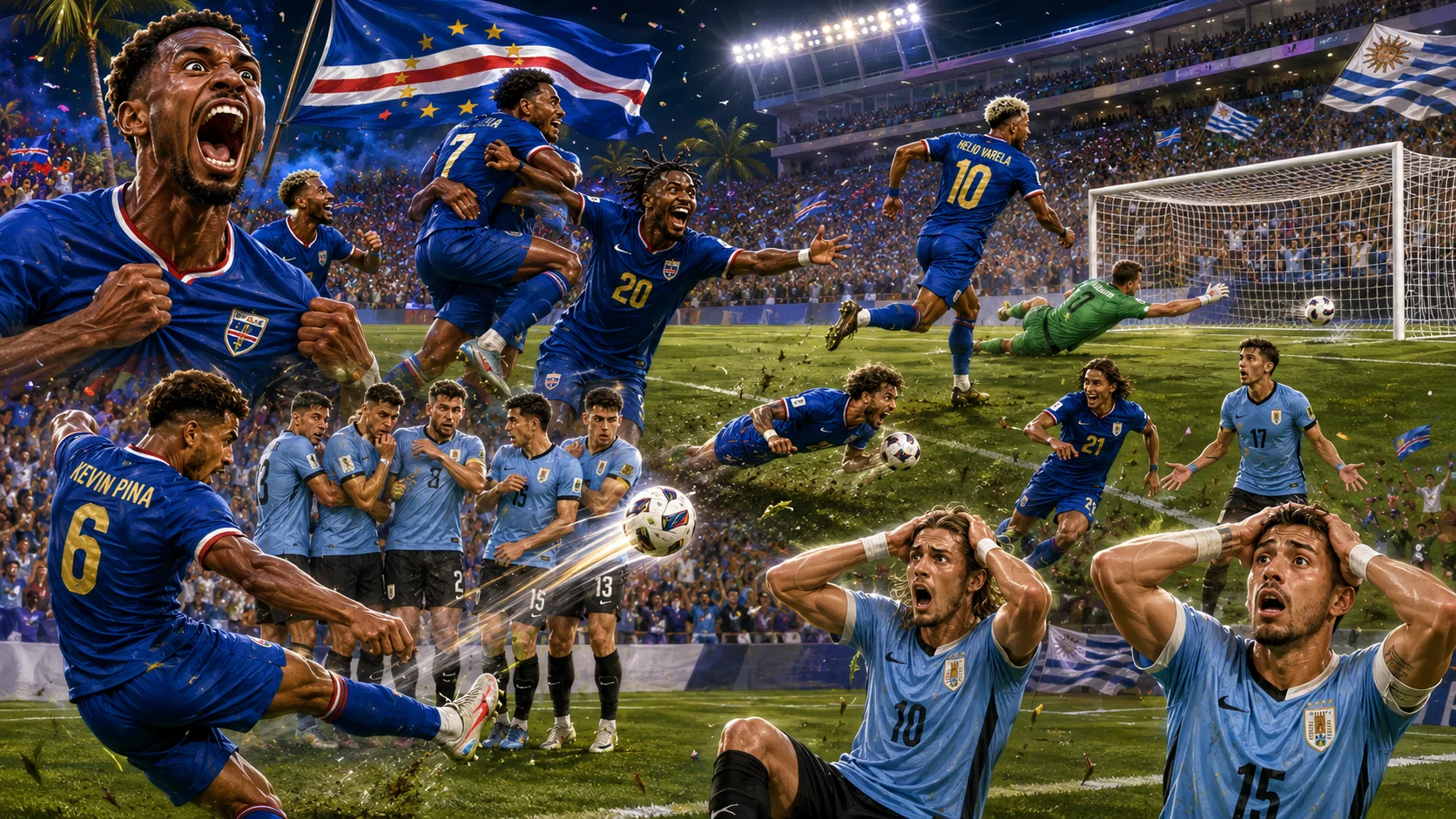
Kevin Pina gave Cape Verde a dream lead with a long-range free-kick that squeezed through the middle of the wall in the 21st minute, but Uruguay responded strongly. Maxi Araújo headed in the equaliser after Sidny Lopes Cabral inadvertently flicked a delivery back towards his own goal, before Agustín Canobbio turned home from close range in first-half stoppage time.
Uruguay’s pressure looked to have turned the match around, yet Cape Verde refused to disappear. A terrible lapse from Mathías Olivera allowed Hélio Varela to intercept a pass across the box, round the goalkeeper and finish into an empty net. Federico Valverde later had a potential winner ruled out for offside, and both teams pushed for a late third without finding it.
The result leaves both Uruguay and Cape Verde on two points from two matches in Group H. Neither side is safe, but both remain firmly in the qualification picture before a decisive final round.
Pina Gives Cape Verde Another Dream Moment
Cape Verde had already won respect after their disciplined draw with Spain, but scoring first against Uruguay took their World Cup story to another level. Pina’s free-kick in the 21st minute was not struck around the wall or curled into a corner. Instead, it drove through the middle, catching Uruguay’s defensive barrier and goalkeeper by surprise.
The goal sent Cape Verde into dreamland and briefly changed the entire rhythm of the match. For a team making their World Cup debut, the confidence gained from taking the lead against Uruguay was enormous. They began to attack with greater belief and moved forward more readily than they had against Spain.
That ambition brought danger, but also risk. The lead opened the game up, and Cape Verde’s shape became more adventurous. Uruguay, who had struggled to find enough clear chances before falling behind, suddenly had more space to exploit.
Uruguay Punish The Extra Space
Uruguay’s equaliser came from one of those moments of pressure and uncertainty. A delivery into the area caused problems, Sidny Lopes Cabral flicked the ball back towards his own goal, and Araújo reacted by diving low to head in from close range.
It was a frustrating goal for Cape Verde because it came from defensive discomfort rather than clean Uruguayan construction. Yet it also reflected Uruguay’s ability to force mistakes by keeping bodies around the penalty area and attacking second balls aggressively.
Canobbio then justified his inclusion in the starting XI by putting Uruguay in front in first-half stoppage time. Araújo was again involved, providing the pass for Canobbio to turn home from close range. In the space of one half, Uruguay had recovered from an awkward position and seemed ready to take control of the group.
For Cape Verde, half-time arrived with mixed emotions. They had shown attacking courage and taken another historic step, but Uruguay’s pressing and intensity had exposed problems in their build-up.
Cape Verde Refuse To Fold
The second half showed why Cape Verde have become one of the most compelling stories of World Cup 2026. They struggled at times to pass through Uruguay’s tireless press, with poor distribution repeatedly inviting pressure, but they kept trying to work openings rather than simply clearing the ball away.
The equaliser came from persistence, but also from a major Uruguay mistake. Olivera tried to play the ball across his own box without checking the danger around him. Varela was waiting, alert and ready. He controlled the pass, took it beyond the goalkeeper and guided the ball into the empty net.
It was a gift, but Cape Verde still had to accept it. Varela’s composure was excellent, and the goal captured something important about this team. They are alive to moments. They may not dominate long spells, but they compete, stay present and punish lapses.
At 2-2, Miami had a genuine thriller. Uruguay pushed again, Cape Verde countered when they could, and both teams sensed that a third goal could swing the group.
Valverde Denied By Offside
Uruguay thought they had found the winner when Valverde bundled the ball over the line from close range, but the celebrations were cut short after the goal was ruled out for offside. It was a huge moment in the match and a major reprieve for Cape Verde.
Valverde’s energy and timing continued to drive Uruguay forward, but Cape Verde’s defensive effort survived the pressure. Bodies were thrown into blocks, midfielders tracked runners and the back line held firm when the match became stretched.
The final stages were chaotic. Uruguay had chances to win it, but Cape Verde also threatened to produce another astonishing twist. Neither side could find the decisive third goal, and the final whistle left both teams with a point that felt valuable and frustrating at the same time.
Standout Player
Hélio Varela was Cape Verde’s standout figure for the decisive second-half moment. His anticipation, touch and composure turned a Uruguay error into a historic equaliser. At World Cup level, underdogs have to be clinical when mistakes arrive, and Varela was exactly that.
Kevin Pina also deserves major credit for the opening goal. His free-kick gave Cape Verde belief and forced Uruguay into a more open game. For Uruguay, Araújo was heavily involved in their comeback, scoring the equaliser and assisting Canobbio’s goal before half-time.
The match did not belong to one dominant individual. It belonged to the drama of two teams refusing to settle, with Cape Verde’s collective resilience again taking centre stage.
Tactical Analysis
Uruguay’s pressing caused Cape Verde major problems. Marcelo Bielsa’s side forced rushed passes, squeezed central lanes and made it difficult for Cape Verde to build cleanly through the pitch. That pressure helped Uruguay regain control after Pina’s opener and produced the territorial dominance that led to their first-half turnaround.
Cape Verde’s challenge was balancing ambition with protection. After going ahead, they became more attacking and left more space behind. Uruguay used that extra room well, especially through Araújo’s movement and Canobbio’s timing around the box.
However, Cape Verde’s bravery also kept them in the match. They did not retreat entirely after Uruguay went 2-1 up. They continued to look for chances, pressed selected moments and stayed alert to defensive errors. Varela’s equaliser was a reward for that concentration.
Uruguay will be frustrated because they had enough pressure and late momentum to win. Cape Verde will know they rode their luck at times, but tournament football is also about surviving difficult phases and taking the moments that come.
What The Result Means
Uruguay and Cape Verde both have two points from two Group H matches. That keeps both alive but leaves neither comfortable. Spain’s win over Saudi Arabia has tightened the group, and the final matchday will decide who reaches the last 32.
For Uruguay, this is another draw after their 1-1 opener against Saudi Arabia. They remain unbeaten, but they have not yet taken control of the group. The final match against Spain now carries major importance.
For Cape Verde, the story remains extraordinary. Two matches into their first World Cup, they have avoided defeat against Spain and Uruguay. That is a remarkable achievement, but the job is not done. Their final group match against Saudi Arabia could become one of the biggest fixtures in the country’s football history.
Final Verdict
Uruguay 2-2 Cape Verde was a gripping reminder that Group H is one of the most unpredictable sections of World Cup 2026. Cape Verde scored first, Uruguay fought back, Cape Verde punished a defensive error, and Valverde’s disallowed goal preserved the draw.
Uruguay will feel they should have won. Their pressing was strong, Araújo and Canobbio changed the match before half-time, and they had late chances to finish the job. But their defensive lapse was costly, and their inability to find a legitimate winner leaves them under pressure.
Cape Verde continue to defy expectations. After holding Spain, they have now taken a point from Uruguay. Their debut campaign is not just gripping; it is fully alive.
Final score: Uruguay 2-2 Cape Verde.
The content provided in this article is intended solely for informational and entertainment purposes. Betting and gambling involve significant risks, including the potential loss of the principal amount wagered. Readers should be aware of their local regulations and laws concerning online betting and gambling. Always gamble responsibly, knowing that outcomes are unpredictable and can lead to financial losses.
If you or someone you know may have a gambling problem, please seek help. Many organisations provide resources and support for individuals struggling with gambling-related harm. Remember, the best bet is always a well-informed decision.
Never gamble with funds that are essential for your daily life, and always set limits to ensure that you do not gamble more than you can afford to lose. The thrill of betting should never overshadow the potential consequences of financial loss. Stay safe, stay informed, and gamble responsibly.