Japan vs Netherlands 2-2: Kamada’s Late Header Rescues World Cup Point in Dallas
Japan showed their trademark resilience in Dallas as Daichi Kamada’s late header secured a deserved 2-2 draw against the Netherlands in their World Cup opener.

Japan vs Netherlands 2-2: Kamada’s Late Header Rescues World Cup Point in Dallas
Daichi Kamada scored a dramatic late header as Japan fought back twice to earn a deserved 2-2 draw against the Netherlands in their opening World Cup Group F match in Dallas.
The 2-2 result delivered one of the most entertaining second halves of the group stage so far. After a cautious opening period, the match burst into life after the break as Virgil van Dijk and Crysencio Summerville twice put the Netherlands ahead, only for Japan to respond through Keito Nakamura and Kamada.
For Japan, this was a result full of spirit, belief and tournament character. For the Netherlands, it will feel like a major opportunity missed after Ronald Koeman’s side twice held a winning position and twice failed to protect it.
Netherlands Start Stronger in Dallas
The Netherlands made the more threatening start, even though the first half remained relatively controlled and short of clear drama. Koeman’s side looked comfortable in possession and carried the greater attacking threat, with Donyell Malen causing Japan several problems with his movement and direct running.
Malen was the Dutch player most likely to open the scoring before half-time. He repeatedly found space in dangerous areas and forced Japan goalkeeper Zion Suzuki into important saves. Suzuki had to remain sharp throughout the opening period, especially as the Netherlands tried to build pressure through wide attacks and quick combinations around the penalty area.
Japan were not as fluent in possession during the first half, but they defended with discipline. Hajime Moriyasu’s side stayed compact, avoided panic and made sure the Netherlands did not turn their early superiority into a decisive lead.
That patience would later prove important. Japan may not have created much before the interval, but they stayed in the game and gave themselves the platform to respond once the tempo increased after half-time.
Van Dijk Heads the Netherlands in Front
The match changed quickly after the restart. In the 51st minute, the Netherlands finally broke through when captain Virgil van Dijk rose superbly to head his side into the lead.
Ryan Gravenberch delivered an excellent cross into the area, and Van Dijk timed his run perfectly before guiding a precise header beyond Suzuki. It was a powerful captain’s contribution from the Liverpool defender and looked to have placed the Netherlands in control of the contest.
At that stage, the Dutch appeared to have found the breakthrough they needed. Their Premier League quality was beginning to show, and Japan suddenly had to chase the match against a side with enough experience to manage the game.
But Japan’s response was immediate. Rather than retreating after conceding, the Samurai Blue increased their intensity and started to move the ball with greater purpose.
Nakamura Equalises for Japan
Japan were level just six minutes later. Keito Nakamura struck a low shot with enough power to beat Bart Verbruggen, bringing the score to 1-1 and completely changing the mood of the match.
The equaliser gave Japan fresh belief. Their passing became sharper, their pressing became more aggressive, and their attacking players began to find pockets of space between the Dutch midfield and defence.
Nakamura’s goal was also an important reminder of Japan’s technical quality. They had spent long spells of the first half defending carefully, but once they began to play with more speed and confidence, they showed they could trouble the Netherlands.
The thousands of Japanese supporters inside the stadium responded loudly, and for the first time in the match, the Netherlands looked uncomfortable.
Summerville Restores Dutch Lead
The Netherlands, however, still had the individual quality to strike again. In the 64th minute, Crysencio Summerville produced a superb finish to restore the Dutch lead.
The West Ham United forward cut inside the penalty area before sending a low shot beyond Suzuki’s outstretched arm. It was a composed and clinical moment, full of balance, confidence and attacking sharpness.
At 2-1, the Netherlands looked set for an important opening victory. With Van Dijk leading the back line and several experienced players on the pitch, Koeman’s team had every reason to believe they could close out the match.
Yet even after retaking the lead, the Dutch never looked fully secure. Japan continued to press, continued to attack and continued to ask questions. The Netherlands dropped deeper as the game moved into its final phase, allowing Japan to build pressure and keep hope alive.
Kamada Scores Late Header to Rescue Japan
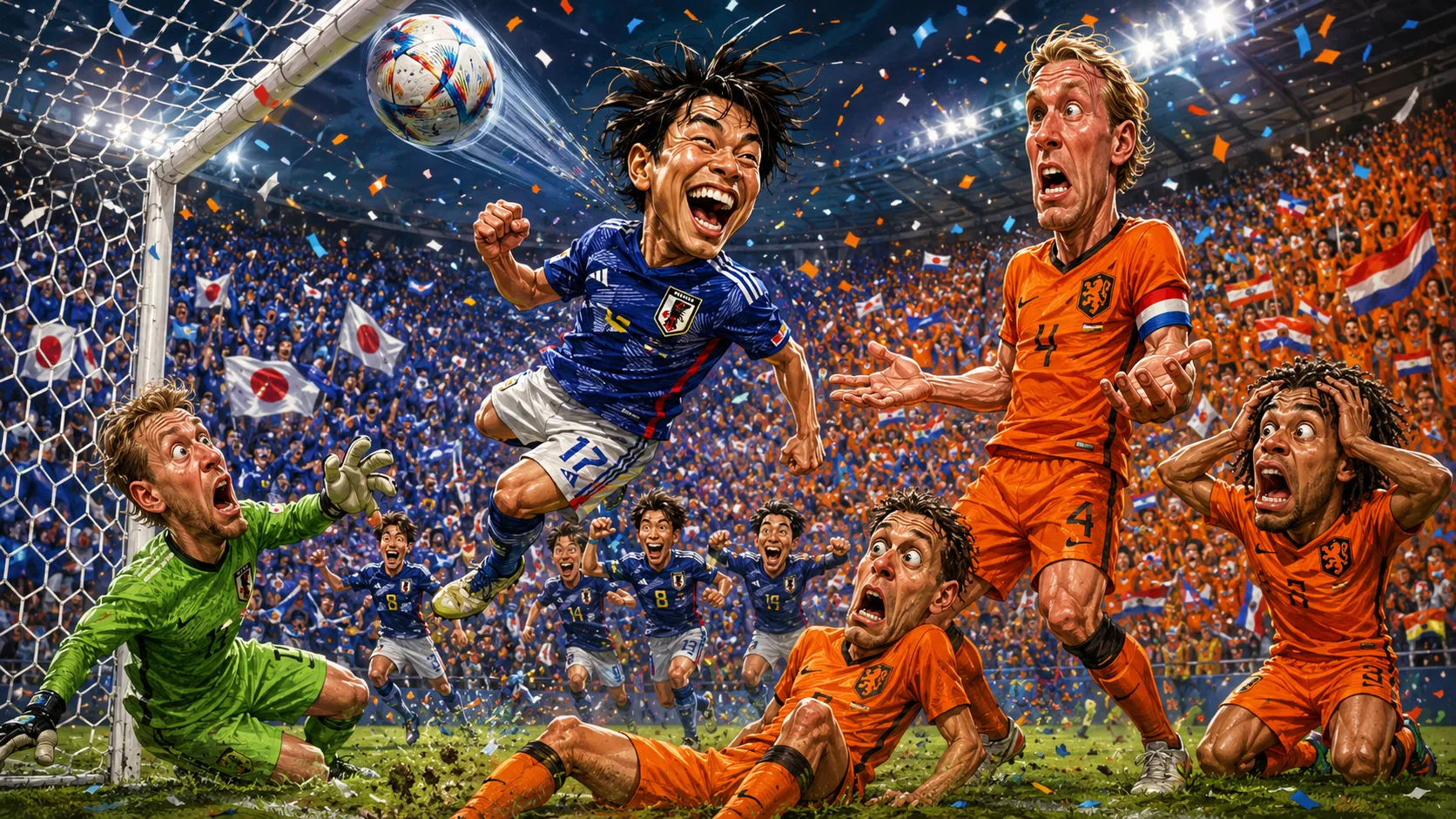
Japan’s persistence was rewarded in the 88th minute when Daichi Kamada delivered the decisive moment.
Koki Ogawa’s effort created danger inside the Netherlands penalty area, and Kamada reacted brilliantly to guide a clever header beyond Verbruggen. It was a calm and instinctive finish under pressure, and it sparked huge celebrations among the Samurai Blue fans in Dallas.
The goal made it Japan vs Netherlands 2-2 and ensured Japan left with a valuable World Cup point. It was late, but it was deserved. Japan had refused to accept defeat, even after falling behind twice, and their pressure eventually forced the reward.
Kamada’s header summed up Japan’s performance. It was intelligent, determined and full of belief. In tournament football, those qualities can matter as much as possession or individual reputation.
Japan Spirit Earns Deserved Reward
Japan have been discussed as potential World Cup dark horses, and this performance showed why. They were not perfect, and they were under pressure for long periods, especially in the first half. But they showed resilience, tactical discipline and strong mentality.
Falling behind once against the Netherlands is difficult enough. Falling behind twice and still finding a way back into the game says plenty about Japan’s character.
The Samurai Blue improved as the match developed. Their second-half pressing was stronger, their attacking play became quicker, and their substitutions helped maintain energy late in the game. They never allowed the Netherlands to settle into a comfortable rhythm after taking the lead.
This draw could prove significant in Group F. Japan did not simply escape with a point; they earned it through persistence and pressure.
Netherlands Left to Regret Missed Chance
For the Netherlands, this result will feel like two points dropped. Koeman’s side had the lead twice and had enough quality on the pitch to win the match, but they were unable to manage the final stages with authority.
Van Dijk’s header gave them the perfect start to the second half, while Summerville’s excellent finish should have put them in a strong position. Instead, they allowed Japan to keep attacking and eventually paid the price.
The Netherlands showed moments of real quality, particularly through their Premier League-based players, but they lacked control when the match demanded calm. Their inability to defend two leads will be a concern heading into the rest of the group stage.
Koeman will know his team cannot afford to keep giving opponents a way back into matches. In a competitive World Cup group, small lapses can quickly become costly.
Key Match Moments
- 51’ – Netherlands 1-0 Japan: Virgil van Dijk heads in from Ryan Gravenberch’s cross.
- 57’ – Netherlands 1-1 Japan: Keito Nakamura equalises with a powerful low strike.
- 64’ – Netherlands 2-1 Japan: Crysencio Summerville cuts inside and finishes low past Zion Suzuki.
- 88’ – Netherlands 2-2 Japan: Daichi Kamada scores with a clever late header to rescue a point.
What This Result Means for Group F
The draw keeps both teams in contention, but Japan may take greater confidence from the result. A point against the Netherlands, especially after coming from behind twice, gives Moriyasu’s side belief and momentum before their next fixture.
The Netherlands remain a strong team with enough quality to progress, but this result increases the pressure on their upcoming match. They will need to be more ruthless in attack and more secure defensively if they want to avoid complications in Group F.
For Japan, the performance strengthens the idea that they can be one of the tournament’s most dangerous outsiders. They showed they can absorb pressure, recover from setbacks and punish elite opponents late in games.
What’s Next?
The Netherlands will face Sweden in their next Group F match on Saturday, 20 June. Japan will return to action against Tunisia on Sunday, 21 June.
After this dramatic 2-2 draw in Dallas, Japan will feel they have gained an important point, while the Netherlands will know they let a valuable opening win slip away.
Final Score
Japan 2-2 Netherlands
Goal.mu verdict: Japan earned this point through resilience, discipline and late attacking pressure. The Netherlands had the quality to win, but Kamada’s late header punished their failure to protect the lead.
The content provided in this article is intended solely for informational and entertainment purposes. Betting and gambling involve significant risks, including the potential loss of the principal amount wagered. Readers should be aware of their local regulations and laws concerning online betting and gambling. Always gamble responsibly, knowing that outcomes are unpredictable and can lead to financial losses.
If you or someone you know may have a gambling problem, please seek help. Many organisations provide resources and support for individuals struggling with gambling-related harm. Remember, the best bet is always a well-informed decision.
Never gamble with funds that are essential for your daily life, and always set limits to ensure that you do not gamble more than you can afford to lose. The thrill of betting should never overshadow the potential consequences of financial loss. Stay safe, stay informed, and gamble responsibly.